
What is the outlook for fine wine in 2026?
What is the outlook for fine wine in 2026?

Fine wine has quietly earned a reputation as a liquid alternative asset class in more ways than one. Long prized by connoisseurs, investment-grade wines have also demonstrated impressive financial performance and stability. For instance, during the 2008 financial crisis, the S&P 500 plunged by over 50% from peak to trough, while the Liv-ex Fine Wine 1000 index dipped only about 10% before rebounding. Even in the tumultuous year of 2022, as inflation surged and U.S. equities sank nearly 20%, fine wine prices rose around 10% on average. Such resilience has caught the eye of investors seeking shelter from stock market volatility and inflation.
In this article, we explore why fine wine is an increasingly compelling alternative investment and what the market outlook for 2026 might hold.
Fine Wine vs. Traditional Assets: A Strong Decade
Between 2005 and 2024, the Liv-ex Fine Wine 100 index surged by over 270%, outperforming global equities and gold in risk-adjusted terms. Unlike stocks or crypto, fine wine prices tend to move independently from financial markets, with a near-zero correlation to the S&P 500.
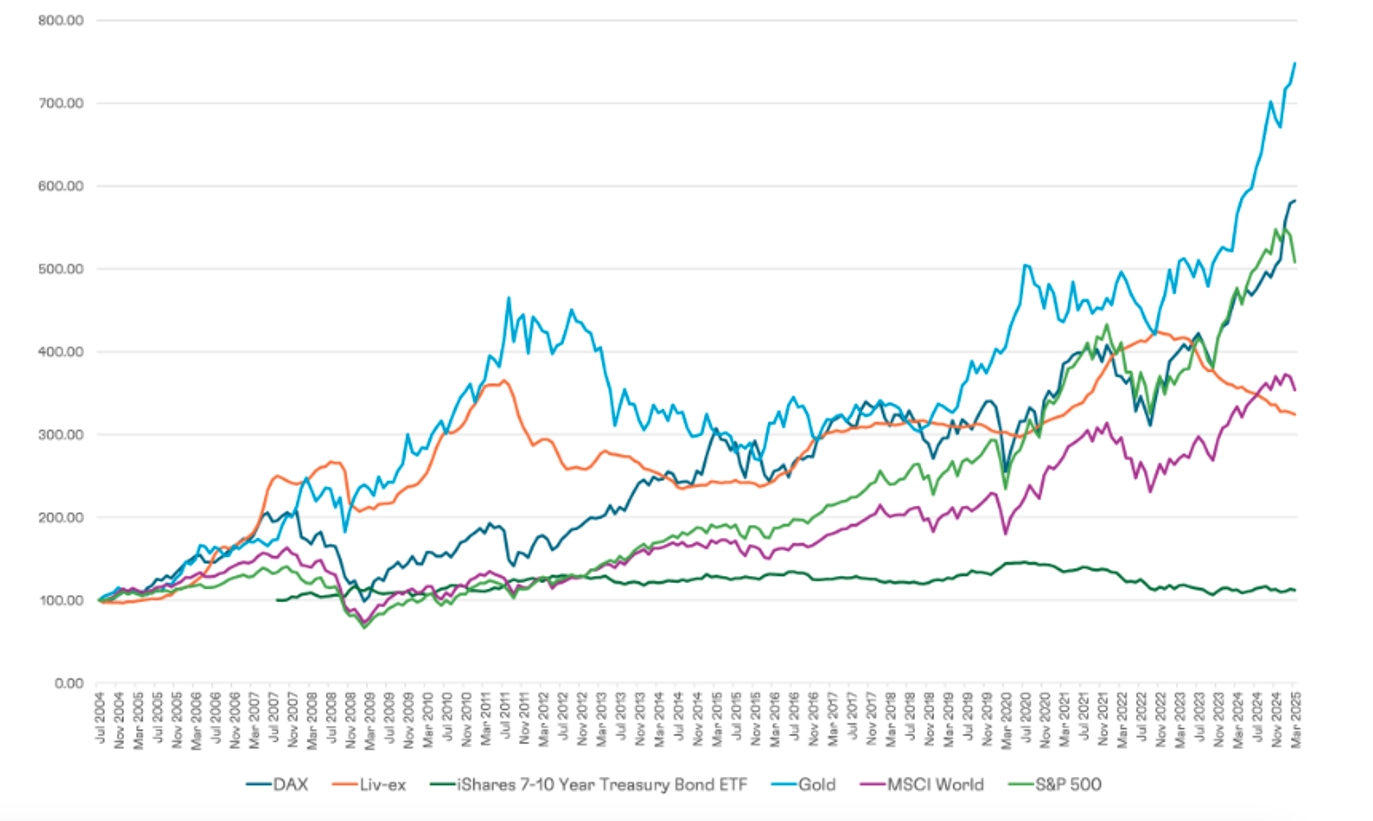
Fig 1: Fine Wine vs S&P 500 and Gold (2004-2024)
Even during downturns such as the 2008 crisis and COVID-19 crash, fine wine showed resilience, recovering faster and losing less value than equities. In 2022, while tech stocks plunged, fine wine prices climbed roughly 10% on average.
Why Investors Are Buying In
1. Scarcity and Stability
Fine wine is a depreciating supply asset. Over time, bottles are gradually consumed, which tightens availability, driving up the value of the remaining stock. Unlike shares, vintages cannot be reissued. This makes fine wine a textbook example of scarcity-driven appreciation.
2. Low Volatility, High Returns
Annualised returns range from 8-12% for top-performing regions. Unlike crypto or growth stocks, price swings are far milder. This makes wine an appealing addition for diversification.
3. Inflation Hedge

Wine, like gold, is a real asset. It has held or gained value during inflationary periods, including 2022-2023. This inflation resistant quality adds to wine's appeal as a wealth preservation tool. It's an asset you can literally store in a vault (or cellar), confident that it won't be "printed" into oblivion and should appreciate as global wealth and consumption grow.
4. Rising Global Demand
China, Singapore, and the U.S. are now leading buyers on wine exchanges like Liv-ex. Millennials and Gen Z account for a growing share of luxury wine consumption. In the U.S., collectors aged 25-40 are driving the growth in demand for both French and domestic wines.
2026 Outlook: Key Drivers
Looking ahead to 2026, several macro-level trends suggest fine wine could be poised for a rewarding run even after a recent period of consolidation. Macroeconomic conditions are increasingly favourable for alternative assets like wine. As of mid-2025, global equities have rebounded strongly from pandemic lows, some say too strongly.

Meanwhile, central banks have tightened monetary policy and then begun easing again, which could leave investors seeking real assets that offer inflation protection and uncorrelated returns. Goldman Sachs' 2025 outlook explicitly advises diversification into alternatives for exactly these reasons. Fine wine fits the bill as a "safe haven" asset: it's not tied to corporate earnings, and it has historically remained stable (or even gained) in periods of economic stress. If market volatility returns or if interest rates decline going into 2026, capital may rotate into tangible assets like wine that offer both stability and a hedge against currency debasement.
Macroeconomic Tailwinds
With global central banks expected to reduce rates in 2025, demand for inflation-hedged, low-volatility alternatives is rising. Goldman Sachs has already flagged fine wine as a "defensive asset class" in its private wealth reports.
Climate Volatility and Supply Pressure
Climate events, frosts in Burgundy, fires in Napa, mildew in Champagne have constrained output. As extreme weather persists, low-yield vintages will become increasingly valuable. The Champagne region alone saw a 25% drop in harvest volume in 2021 due to frost and mildew, fueling price hikes across prestige labels.
New Investors, New Appetite
Millennials and Gen Z investors are entering with different expectations: digital access, transparency, and lower minimums. Platforms like Vinovest, CultX, and WineCap have responded with user-friendly tools and fractional ownership options.
Regional Breakdown: Where to Watch
Which wines will lead the charge in the coming years? Fine wine is not a monolith. Its performance can vary widely by region and category. Recent trends suggest a few key areas to watch in 2026:
| Region | 2024 Return | 2025 Return (Year to date) | 2025 Trend |
|---|---|---|---|
| Burgundy | -11.3% | 9.8% | Stabilizing, poised to rebound |
| Champagne | -9.7% | 8.6% | Recovery underway |
| Bordeaux | -12% | 5.1% | Undervalued, potential value play |
| Tuscany (Italy) | -8% | 10.2% | Most resilient |
| California | -10.6% | 9.1% | Gaining credibility |
Sources: Liv-ex, WineMarketJournal
Burgundy & Champagne

After massive price run-ups, both experienced corrections in 2023-2024. But scarcity and brand prestige (e.g., DRC, Krug, Dom Pérignon) continue to drive demand. Bargain valuations may fuel a resurgence in 2026.
Bordeaux
Historically dominant but recently overlooked, First Growth Bordeaux wines are now trading at multi-year lows. Smart money is accumulating.
Italy
Piedmont and Tuscany have shown consistent strength. Super Tuscans like Sassicaia and Barolos like Giacomo Conterno remain top picks.
California & Beyond
Cult labels like Screaming Eagle and Harlan are increasingly traded globally. New World regions (e.g., Spain's Vega Sicilia, Australia's Penfolds Grange) are gaining ground, especially among younger collectors.
Innovations Fueling Market Growth
The fine wine market may be centuries old, but it's now embracing 21st-century innovations. By 2026, technology-driven trends are set to make wine investing more accessible, transparent, and even fun.
Fractional Wine Ownership
Platforms now allow users to invest in bottles for as little as $100. Cult Wines and Vinovest offer fully managed portfolios, with fractional shares tied to asset-backed tokens or traditional shares. This has opened up wine as an asset class to investors who could not afford to invest in this asset class before.
NFTs and Tokenization
Château Angélus and Robert Mondavi have launched NFT-linked wines. These secure provenance, enable trading on digital exchanges, and appeal to crypto-native investors.
Institutional Funds
Wine is being bundled into structured products, private equity vehicles, and potentially soon ETFs. Family offices and hedge funds are increasingly allocating capital to wine portfolios.
Risks to Consider
• Liquidity: Wine markets are less liquid than stocks. Sellers may wait days or weeks to offload inventory.
• Storage & Costs: Proper bonded warehouse storage, insurance, and fees can reduce net returns.
• Authentication: Fraud is still a concern; always use reputable platforms with verified provenance systems.
• Market Timing: As with all assets, timing matters. 2022-2024 saw a pullback - 2026 may mark the next upswing.
Investor Takeaway
After a cooling period from 2022-2024, fine wine appears primed for a strong rebound. Macroeconomic support, climate-driven scarcity, and demographic shifts are aligning in its favour. As platforms lower the barriers to entry and institutional capital flows in, 2026 may be a breakout year for wine investing.
Fine wine won't replace equities, but as a diversification tool with low volatility, inflation resistance, and cultural cachet, it offers stability over the long term, which can help you balance your portfolio.