
What is a Pre-IPO?
What is a Pre-IPO?
Before Airbnb went public, a small group of early investors already owned a piece of it. Here's how that works and what it means for you.

In late 2020, Airbnb's IPO was the most anticipated listing in years. On its first day of public trading, shares opened at $146, nearly double the IPO price, and closed at $144.71. The company was suddenly worth over $86 billion.
But here's what most people didn't notice. By the time ordinary investors could buy a single share, the real early-stage gains had already been captured. A handful of investors which usually comprises venture capitalists, private equity funds, and select individuals had bought in years earlier, at prices that made the IPO price itself look expensive.
They had participated in something called a pre-IPO.
What is a Pre-IPO?
A pre-IPO is when investors purchase shares in a private company before it lists on a public stock exchange. The company hasn't "gone public" yet. It's not on the NYSE or Nasdaq but equity in the business is changing hands in private transactions.
How it actually works

Private companies have shareholders from day one — typically the founders, early employees, and investors who funded the company's growth. As the company matures, it may raise additional capital in funding rounds such as Series A, Series B, and so on.
Each round brings in new investors at a negotiated price.
Pre-IPO investing usually refers to the later stages of this private lifecycle. When a company is large enough that an IPO is on the horizon, but hasn't crossed the public threshold yet. At this point, shares might be available through:
- VCs: Venture capital firms investing in growth rounds
- PE: Private equity funds taking strategic positions
- Retail: Select platforms now opening access to individual investors
Shares are priced based on private valuations which are determined through negotiation, comparable company analysis, and investor appetite rather than the real-time price discovery of a public market. When the IPO eventually arrives, existing shareholders may sell, hold, or be subject to a lock-up period that prevents selling for a set window (typically 90–180 days post-listing).
Why companies pursue pre-IPO capital

Companies don't pursue pre-IPO investors purely for the money though the capital clearly helps. There are strategic reasons that make the pre-IPO stage valuable for the businesses themselves.
First, it lets them raise significant capital without the regulatory burden and public scrutiny of a stock listing. Public companies face quarterly earnings calls, SEC filings, and intense analyst coverage, none of which exists in the private world. For a company still finding its footing operationally, that breathing room is genuinely valuable.
Second, pre-IPO rounds often bring in strategic investors — not just money, but connections, distribution partnerships, and credibility. When Stripe brought in Sequoia and General Catalyst at early stages, those names on the cap table opened doors that capital alone couldn't.
Finally, late-stage private rounds serve as a kind of dress rehearsal for the public markets. Companies use them to test investor appetite, refine their valuation story, and arrive at an IPO with institutional backers already on board.
The opportunity for investors
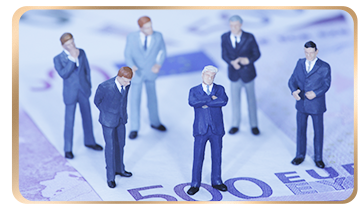
The core appeal is access. Public market investors buy companies after the market has already priced in years of growth. Pre-IPO investors can enter before that repricing event and if the IPO is successful, the delta between private entry price and public market price can be substantial.
Beyond pure returns, there's a diversification argument. Pre-IPO stakes in private companies are largely uncorrelated with daily stock market movements. They respond to company fundamentals, not the sentiment swings that move public equities on a given Tuesday.
For sophisticated investors, the pre-IPO stage offers something increasingly rare: genuine price inefficiency. Private markets are less transparent and less liquid than public ones, which means that mispricing in both directions is more common. For those who do their homework, that inefficiency can work in their favour.
The risks
Any honest account of pre-IPO investing has to spend equal time on the downside. This is not a mechanism that converts effort into guaranteed returns. Several structural risks are baked into the asset class:
- Illiquidity. Unlike public shares, you typically cannot sell a pre-IPO stake whenever you want. You are locked in until an exit event — IPO, acquisition, or secondary sale — which may be years away, or never.
- Valuation uncertainty. Private valuations are negotiated, not market-determined. The price you pay may reflect optimism rather than fundamentals and there's no ticker to tell you whether that optimism was warranted.
- IPO lock-up periods. Even when a company goes public, early investors often face a 90–180 day period during which they cannot sell. If the stock drops in that window — as it often does — you are watching from the sidelines.
- The IPO may never happen. Companies that raise pre-IPO capital sometimes pivot, get acquired at unfavorable terms, or simply fail. The anticipated public listing may not materialise for years, if at all.
Case Studies
The best way to understand pre-IPO investing is to look at what actually happened to real investors across different companies, different entry points, and very different outcomes.

Airbnb: The textbook success
Airbnb raised over $1 billion in late-stage rounds at roughly a $31 billion valuation in 2017. When it went public in December 2020, the market valued it at over $86 billion. Early investors who entered at 2017 prices saw significant appreciation. However, lock-up periods meant many sat through a volatile post-IPO window before they could sell a single share.
Uber: A lesson in entry price
Uber raised around $1.75 billion in 2018 while being privately valued at approx $76 billion. Its IPO in May 2019 priced at $45 per share, implying roughly $82 billion — modest upside for late-stage private investors. Those who entered at very early rounds did exceptionally well. Those who came in at 2018 prices faced years of the stock trading below its IPO price.
WeWork: A cautionary tale of optimism over fundamentals
In 2019, SoftBank's investment gave WeWork a private valuation of $47 billion. It looked like a company on the fast track to a public listing. When it filed for its IPO, public market scrutiny exposed the financial reality behind the private narrative and the offering was pulled entirely. Late-stage investors who entered at the $47 billion mark saw their equity nearly wiped out. Valuation uncertainty, one of the core risks of pre-IPO investing, went from an abstract warning to a hard lesson very quickly.
Stripe: High demand, extreme illiquidity
Stripe has become one of the most sought-after names on retail pre-IPO platforms like EquityZen. Its private valuation has soared past $150 billion, and early investors are sitting on enormous paper gains. But there is no IPO date in sight. Those investors are locked in waiting for a secondary sale or an exit event that may still be years away. Stripe is a reminder that even when you pick the right company, illiquidity is a real constraint, not just a footnote in the risk disclosures.
Spotify: Proof that patience can pay off
Spotify remained private for 12 years, raising billions in pre-IPO capital while refining its business well away from the quarterly scrutiny of public markets. When it finally listed in 2018 via a direct listing rather than a traditional IPO, early employees and VCs who had held through years of illiquidity saw substantial rewards. Spotify is the clearest argument for the "long time horizon required" approach: the breathing room of staying private was deliberate, and for those who stayed patient, it worked.
The lesson across all five isn't that pre-IPO investing is good or bad. It's that entry price, timing, and the quality of the underlying business determine outcomes, exactly as they do in public markets, just with fewer opportunities to exit if you get it wrong.
Pre-IPO vs. IPO vs. Public Market
| Pre-IPO Private stage |
IPO Listing day |
Public Market Post-listing |
|---|---|---|
| Negotiated entry price | Set by underwriters | Real-time price discovery |
| Higher upside potential | First-day pop possible | Full liquidity |
| Low liquidity | Lock-up for insiders | Open to all investors |
| Accredited/institutional access | Public retail access | Volatility priced in |
| Long time horizon required | High media attention | Growth already recognised |
Who can benefit the most from Pre-IPO investment?
| Retail Investors | Startup Employees | Founders |
|---|---|---|
| Access is expanding via platforms like EquityZen and Forge. Understand the illiquidity and longer time horizons before participating. | Your stock options are a form of pre-IPO equity. Understanding this space helps you evaluate what you actually hold. | Pre-IPO rounds are a funding strategy, not just a financing event. The investors you bring in shape your company's trajectory. |
Key Takeaway
Pre-IPO investing offers genuine access to early-stage value creation but it does so by shifting risk from the public market squarely onto the individual investor. The upside is real. So is the illiquidity, the uncertainty, and the patience it demands.