
What caused the drop in lithium prices?
What caused the drop in lithium prices?

Lithium, a critical component in electric vehicle (EV) batteries and renewable energy storage systems, has experienced a dramatic reversal in its market dynamics. This metal, which was among the best-performing commodities over the past two years, has seen its prices plummet in 2023, leaving investors and industry observers both startled and intrigued.
2021 marked a breathless rally for lithium, with prices skyrocketing largely due to booming EV sales. Bloomberg's data indicates that the total spot value of lithium consumption surged from approximately $3 billion in 2020 to a staggering $35 billion in 2022. However, the financial landscape for lithium in 2023 couldn't be more different. The market price of this essential metal has crashed back down to earth, prompting questions about the factors triggering such a significant turnaround.
Overview of the Lithium Market

The lithium market, a pivotal player in the global shift towards renewable energy and electric mobility, has been on a roller coaster ride over the past few years. This critical element, often referred to as "white gold," plays a significant role in industries such as electric vehicles (EVs) and renewable energy storage, primarily due to its use in lithium-ion batteries.
In 2022, the global lithium market was valued at USD 37.8 billion. However, despite the anticipated growth in the EV industry, the market value dipped to USD 22.2 billion in 2023. This decline can be attributed to an oversupply of lithium, especially from Australia and China, coupled with a slowdown in EV sales growth following changes in subsidy policies.
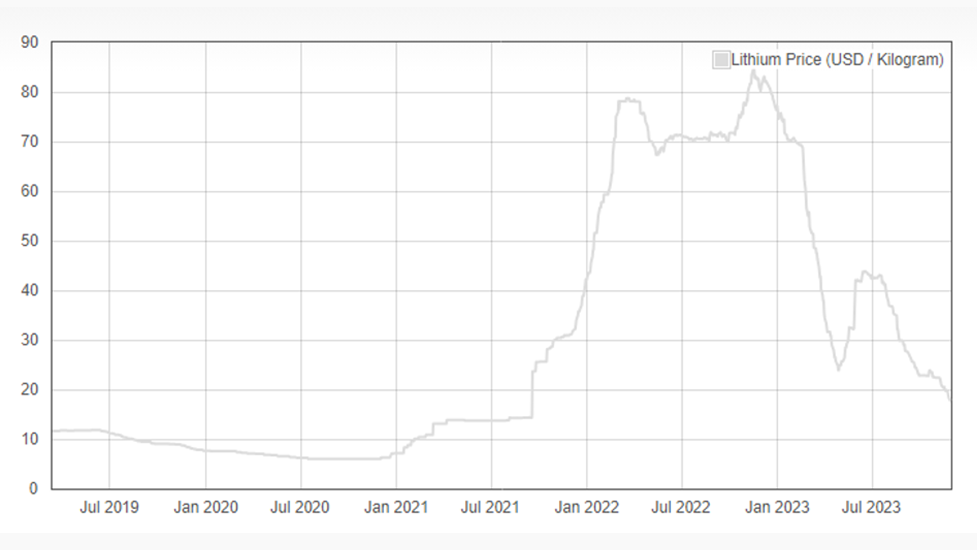 Source: Daily Metal Price
Historically, the lithium market has been known for its volatility, with prices fluctuating based on the supply-demand dynamics. This is why analysts at Institutional Investor believe that the selloff is an overreaction to a spot price decline that will correct itself by the end of 2023. They suggest that the current market dynamics might open up opportunities for savvy investors to capitalize on undervalued stocks in the lithium sector.
Source: Daily Metal Price
Historically, the lithium market has been known for its volatility, with prices fluctuating based on the supply-demand dynamics. This is why analysts at Institutional Investor believe that the selloff is an overreaction to a spot price decline that will correct itself by the end of 2023. They suggest that the current market dynamics might open up opportunities for savvy investors to capitalize on undervalued stocks in the lithium sector.
 The dramatic rise in lithium prices in late 2021 can be attributed to several key factors. The primary driver was the skyrocketing demand for electric vehicles (EVs), as lithium is a vital component in EV batteries, leading to a surge in its market value. Supply constraints also played a significant role, with the International Energy Agency highlighting an imbalance between supply and burgeoning demand. Additionally, the global economic recovery from the COVID-19 pandemic further boosted the demand for commodities, including lithium.
Thus, the convergence of these factors triggered the notable increase in lithium prices during this period. However, as we transition into 2023, the narrative around lithium prices has taken an unexpected turn. Several elements have come into play that have significantly influenced this shift.
Factors that influence Lithium Prices

The demand and supply dynamics of the lithium market are influenced by a complex interplay of factors, which explains why Matt Fernley, Managing Editor at Battery Materials Review, remains optimistic about the metal despite lithium prices halving in 2023. He suggests that the current price drop could be a temporary phase, influenced by short-term market dynamics rather than a long-term trend.
Production and Supply Dynamics
The basic market principles for lithium are very simple. A consistent rise in demand is expected to put pressure on supply through 2030. From 2023 until 2025, supplies from existing and upcoming projects will come online to satisfy the current levels of demand.
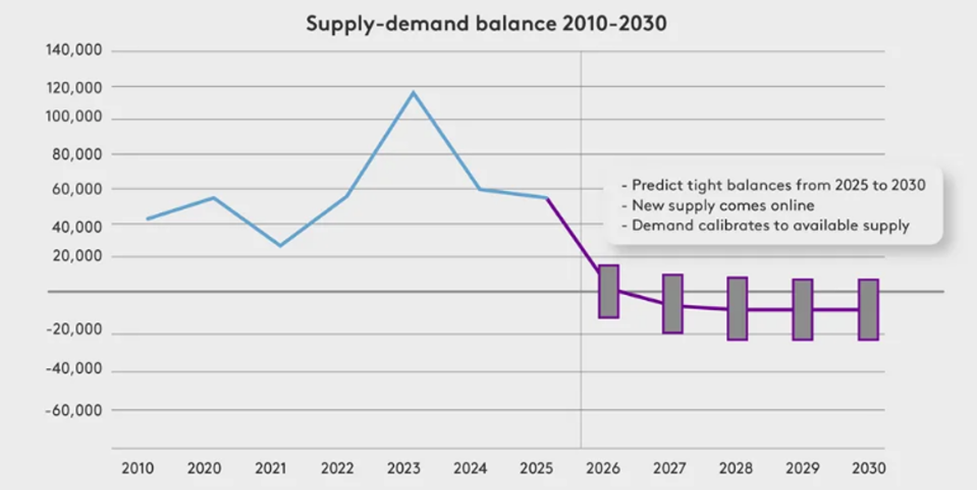 Source: FastMarkets
 Oversupply in the Asian market, led by Australia and China, has played a significant role in the current price drop. However, from 2025 to 2030, there will be a need to introduce new sources of supply to keep up with the growing demand. Where will this supply come from? Australia, Chile, Argentina and China mainly - but Iran can also become a key player after the recent discovery of the second largest lithium deposits in the world. Given the current state of the market, it is highly unlikely for Iran to become a major producer in the short term. This means that in 2025, strain on supply is a very likely scenario.
Consumer Demand for Electric Vehicles
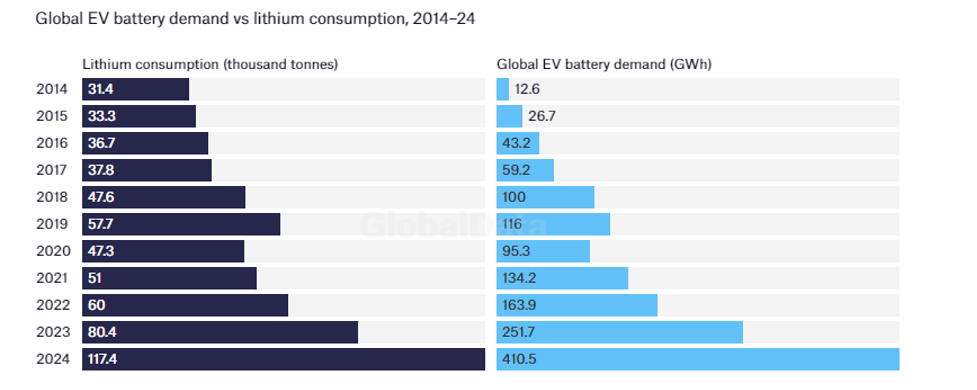
Source: GlobalData
The demand for EVs has skyrocketed in recent years, significantly driving up the demand for lithium, used in EV batteries but because this demand is being met by increased supply, prices have come down. Another key contributing factor to the price dip has been the cooling of the EV sales growth in Europe and China following changes in subsidy policies which have ended the 11-year price parity between electric vehicles and internal combustion engines. Manufacturers in Europe are struggling to compete with China in terms of cost.
However, with increasing consumer demand, the New York Times notes that the falling lithium prices have made electric cars more affordable since the cost of lithium-ion batteries significantly impacts the overall price of EVs. This can kick off a cycle where low prices trigger demand, which beyond 2025 can once again put stress on supply leading to increased prices.
Global Economic Factors
Investor sentiment and global economic factors play a significant role in the determination of lithium prices. The sentiments of optimism or pessimism among investors can greatly influence market trends.
For instance, auto and battery manufacturers, including General Motors, Honda, LG Energy Solution, among others, have scaled back their expansion plans for electric vehicles (EVs) in recent months. The primary reason for this change in strategy is the surge in interest rates, which is suppressing demand and resulting in a global surplus of the battery metal.
Allan Ray Restauro from BloombergNEF predicts a further decline in lithium prices in the coming year as the supply of lithium continues to grow. He notes that regional variations in EV sales have been negatively influencing the industry's sentiment.
The world's second-largest lithium producer, Chilean miner SQM, has attributed the recent drop in lithium prices to an excess of inventory, particularly in Asia.
Both investor sentiment and global economic factors are intertwining to shape the trends in the lithium market, influencing both demand and supply dynamics.
Investor Takeaway
Despite the recent dip in prices, the lithium market presents a promising outlook for investors. Here's why:
- 1. Ongoing Demand from Electric Vehicle Industry: The EV industry continues to grow, thereby ensuring steady demand for lithium. The decrease in lithium-ion battery pack prices could further stimulate the growth of the EV market.
- 2. Potential Supply Shortages: Lithium supply is going to come under strain after 2025. When this happens, lithium prices could rebound due to the supply-demand imbalance.
- 3. Future Technological Advancements: As technology continues to advance, the efficiency and performance of lithium-ion batteries are likely to improve, further increasing their demand.
- 4. Environmental Regulations: With governments worldwide implementing stricter environmental regulations, the shift towards renewable energy sources and electric vehicles is expected to accelerate, driving up the demand for lithium.
In conclusion, while the lithium market has seen some fluctuations, the long-term prospects remain strong. The ongoing global transition towards renewable energy and electric mobility ensures that lithium will continue to play a pivotal role in the global economy, making it an attractive investment opportunity.