
What Are the Benefits of Investing in Fine Wine?
What Are the Benefits of Investing in Fine Wine?

Once the domain of connoisseurs and collectors, fine wine investing has gained recognition for its potential to deliver steady returns, diversification, and resilience. In this article, we delve into the unique benefits of fine wine as an investment, backed by data, expert insights, and real-world case studies.
Understanding Fine Wine Investment
Fine wine investment involves acquiring high-quality wines, often from renowned regions such as Bordeaux, Burgundy, or Napa Valley, with the aim of selling them at a profit as they age. The market is driven by scarcity, global demand, and the intrinsic qualities of wine that improve with time. According to the Liv-ex Fine Wine 1000 Index, which tracks wines from top regions, fine wine has consistently outperformed many traditional asset classes over the past two decades.
Diversification Beyond Traditional Assets
One of the most compelling benefits of fine wine investing is its ability to diversify portfolios. Fine wine exhibits a low correlation with traditional financial markets, such as stocks and bonds. This means that during periods of market volatility or economic downturns, fine wine prices often remain stable or even appreciate. For instance, during the 2008 global financial crisis, while equity markets plummeted, the fine wine market demonstrated remarkable resilience.
Historical Performance
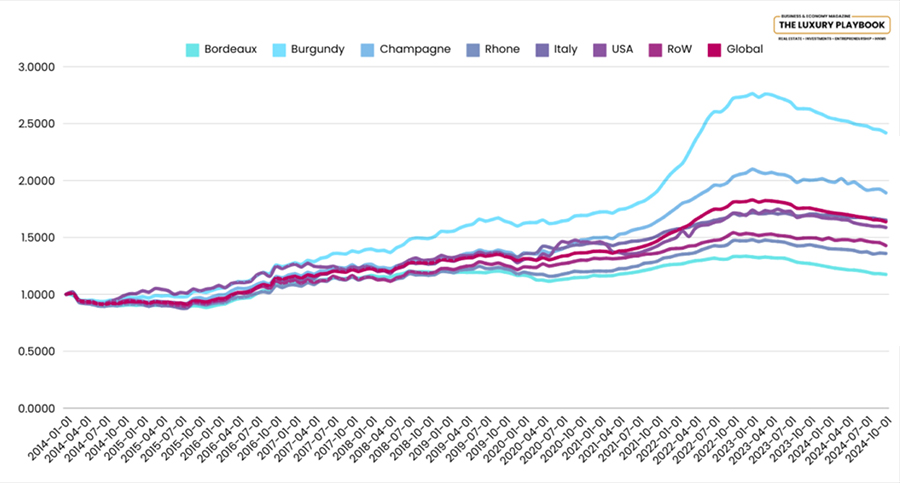
Fine wine’s historical performance adds to its appeal. The Liv-ex 1000 Index, which encompasses 1,000 wines from key regions, has shown robust growth, increasing by 314% since January 2004. Additionally, the Bordeaux 500 sub-index, which focuses on premier Bordeaux wines, has consistently delivered strong returns, underscoring the market’s reliability.
Tangible Asset with Intrinsic Value
Unlike stocks or bonds, fine wine is a tangible asset that provides intrinsic value. Beyond its monetary potential, fine wine carries cultural and emotional significance. Investors can enjoy the ownership of a product that ages gracefully over time. Furthermore, fine wine’s status as a “wasting asset”—with a life span of 20 to 50 years—exempts it from Capital Gains Tax in certain jurisdictions, such as the UK, enhancing its tax efficiency.
Supply and Demand Dynamics
The dynamics of supply and demand play a pivotal role in fine wine’s investment potential. Limited production, coupled with increasing consumption, particularly in emerging markets like China and India, drives up the value of remaining stock. For instance, wines from châteaux such as Lafite Rothschild or Domaine de la Romanée-Conti are produced in limited quantities each year, ensuring their scarcity and consistent demand. In 2021, a single bottle of 1945 Domaine de la Romanée-Conti sold at auction for $558,000, a testament to the value of rarity and provenance.
 Resilience During Economic Downturns
Fine wine’s performance during economic downturns is another notable benefit. Historically, wine prices have shown stability when traditional markets face turbulence. This resilience is attributed to the consistent global demand for high-quality wine and the perception of wine as a luxury good that retains value over time. For instance, during the COVID-19 pandemic, while global markets experienced significant volatility, the Liv-ex 1000 Index rose by 2% in 2020, reflecting the stability of the fine wine market.
Successful Fine Wine Investments

1. 1982 Château Lafite Rothschild
Investors who purchased a case of 1982 Château Lafite Rothschild in the early 2000s saw its value increase by over 400% within two decades. By 2009, this value had surged to £25,000, marking an increase of over 850% within a decade. As of 2023, individual bottles are listed at prices ranging from $1,950 to $3,999, depending on condition and provenance. Initially priced at approximately $400 per case, this vintage has become one of the most sought-after wines, with individual bottles now selling for thousands of dollars.
2. Domaine de la Romanée-Conti
Known as the pinnacle of Burgundy wines, Domaine de la Romanée-Conti consistently breaks auction records. In 2011, a case of 1990 Romanée-Conti fetched $297,400, demonstrating the enduring demand for this iconic producer.
3. Screaming Eagle Cabernet Sauvignon
An iconic wine from Napa Valley, Screaming Eagle’s limited production and cult status have made it a lucrative investment. A bottle of its inaugural 1992 vintage, initially sold for $75, was auctioned for $500,000 in 2000.
Risks and Considerations
While fine wine investment offers numerous advantages, it is essential to acknowledge its risks in detail:
- • Liquidity Constraints: Unlike stocks or ETFs that can be sold instantly, fine wine investments may require months or even years to find the right buyer, especially for niche or highly-priced vintages. The market can be less predictable, as the pool of buyers for high-value wines is relatively small.
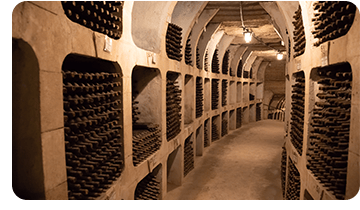
- • Storage and Insurance Costs: Fine wine must be stored under precise conditions to maintain its quality and value. Temperature fluctuations, humidity, and light exposure can degrade the wine. Professional storage solutions, while effective, add recurring costs. Additionally, comprehensive insurance is necessary to protect against theft or accidental damage, further increasing the cost of ownership.
- • Dependence on Expertise: Fine wine investment demands a high level of expertise to identify the right wines, vintages, and producers. Without proper knowledge or access to expert guidance, investors may overpay or select wines with limited appreciation potential.
Investor Takeaway
Investing in fine wine offers a unique blend of financial and emotional rewards. Its low correlation with traditional markets, strong historical performance, and tax efficiency make it an attractive choice for diversification. The appreciation of the 1982 Château Lafite Rothschild and Domaine de la Romanée-Conti’s auction success underscores the market’s potential. However, prospective investors must approach the market with caution. The risks, including storage costs, counterfeit concerns, and liquidity constraints, highlight the importance of thorough research and expert guidance.
By incorporating fine wine into your portfolio, you not only diversify your investments but also enjoy the timeless allure of a tangible, appreciating asset.