
The strategic importance of helium
The strategic importance of helium
One of the world’s most strategically important gases is still associated mainly with birthday balloons.
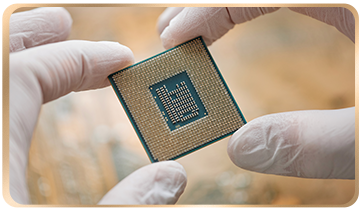
That is the helium paradox. To most people, helium means balloons, novelty voices, and a gas so ordinary that wasting it feels harmless. In reality, helium sits quietly inside some of the most advanced systems in the global economy: semiconductor fabs, MRI scanners, space programmes, quantum research, defence systems, and high-end industrial processes. It is invisible, difficult to replace, and far more strategically important than its public image suggests.
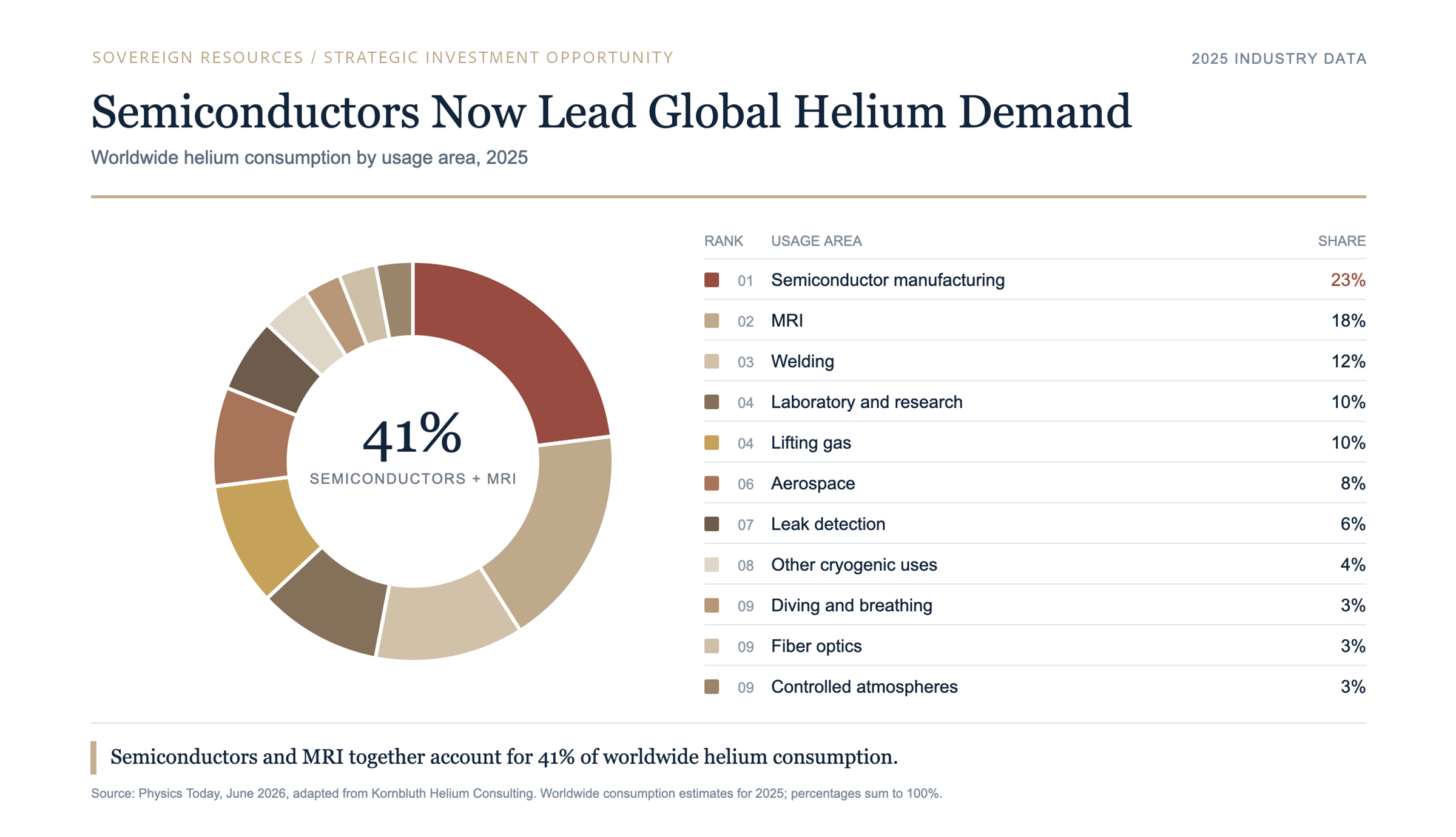
Helium’s importance is not theoretical. It is already embedded in the infrastructure of modern technology. In semiconductor manufacturing, helium is used because of its unique thermal properties and chemical inertness. Chipmakers rely on it for cooling, heat transfer, and controlled manufacturing environments where contamination can destroy yields. As artificial intelligence, high-performance computing, electric vehicles, and advanced defence systems all demand more chips, the helium connection becomes more important.
The same logic applies to medicine. Liquid helium is essential for cooling the superconducting magnets used in most conventional MRI systems. Without helium, many of these machines cannot operate safely or effectively. This is what makes helium different from ordinary commodities: it is not simply an input that can be substituted when prices rise. In several critical applications, there is no practical replacement.
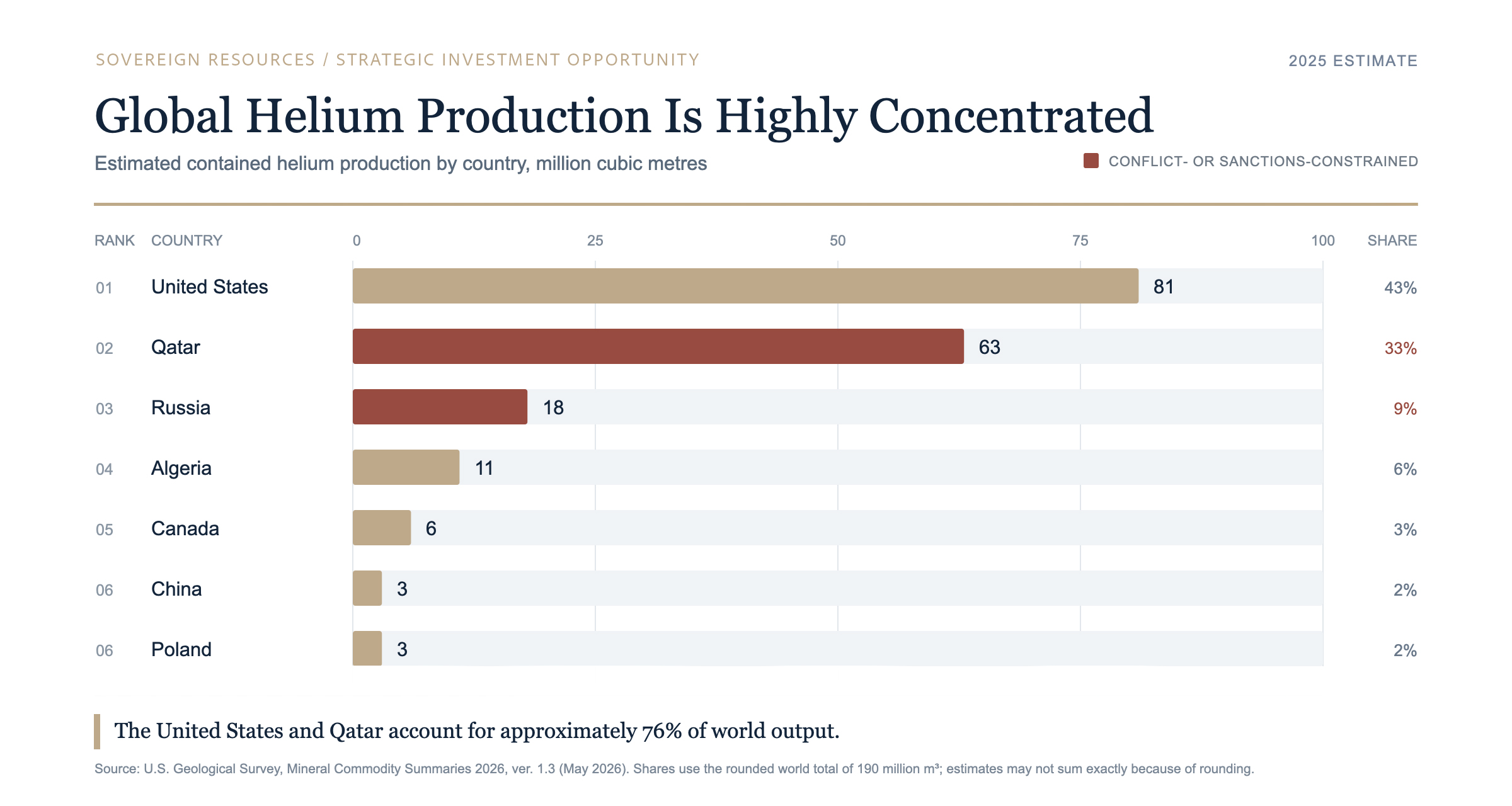
That supply chain is also highly concentrated. Qatar has become one of the world’s most important helium producers because helium is extracted alongside its massive natural gas and liquefied natural gas operations, particularly through the North Field and Ras Laffan industrial complex. According to U.S. Geological Survey data, Qatar accounted for roughly one-third of global helium production in recent estimates. That level of concentration gives Qatar unusual strategic relevance far beyond energy exports alone.
Geopolitics tightens the helium market
- Two of the world’s three largest helium sources are now severely constrained.
Qatar supplied approximately 33% of estimated global production in 2025, but attacks on Ras Laffan during the conflict involving the United States and Iran halted production and exports, although one helium plant has partially restarted. A full recovery still depends on regional stability and reliable passage through the Strait of Hormuz.
Russia contributes another 9%, but its war against Ukraine has resulted in an EU ban on Russian helium imports, while Moscow has introduced its own export controls.
- Together, Qatar and Russia represent roughly 42% of global production that is currently restricted or unreliable for many international buyers.
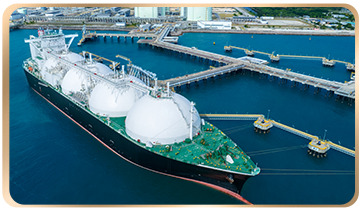
The consequences are already visible: spot helium prices reportedly doubled following the Middle East disruption. With production restarts, shipping routes and specialised helium containers all requiring time to normalise, the pressure may be far from over.
This matters because helium supply is not easily rerouted or rapidly expanded. New helium projects require the right geology, processing infrastructure, purification capacity, and long-term offtake arrangements. Unlike oil, where markets can often shift cargoes between suppliers, helium is smaller, more opaque, and more fragile. A disruption in a single major producing region can quickly affect hospitals, chip manufacturers, laboratories, and aerospace users.
The pricing history of helium adds another layer to the story. For decades, the U.S. Federal Helium Reserve helped shape the market by releasing stored supply into the system. That reserve provided stability, but it also distorted pricing by keeping helium cheaper than it likely would have been in a fully market-driven environment. As the reserve has been drawn down and transferred into private hands, the market is being forced to confront a basic reality: helium has been priced well below its strategic importance.
Investor takeaway

Helium is difficult or impossible to replace in several high-value applications, non-renewable, supply-constrained, and tied directly to industries that sit at the centre of technological and geopolitical competition. It is not a mainstream commodity story, which is precisely why it deserves attention. The market may still associate helium with balloons, but the real demand comes from chips, medicine, space, defence, and deep technology.
In a world increasingly defined by strategic materials, helium belongs in the same conversation as critical minerals, rare earths, uranium, and advanced semiconductor inputs. Its importance is hiding in plain sight. The question is not whether helium matters. The question is how long markets can continue to price it as if it does not.