
The physical cost of artificial intelligence
The physical cost of artificial intelligence
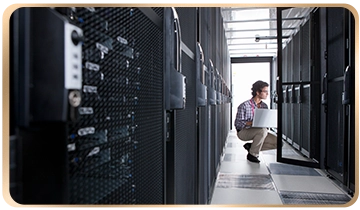
Artificial intelligence may live in the cloud, but the cloud is becoming one of the most resource-intensive pieces of infrastructure on Earth.
Every question asked, image generated and model trained eventually reaches a physical data centre packed with processors working around the clock. Those processors need electricity. Electricity creates heat. That heat has to be removed, and as AI becomes more powerful and more widely used, the infrastructure behind it is placing growing pressure on electricity grids, water supplies and global commodity markets.
The scale is changing remarkably quickly.
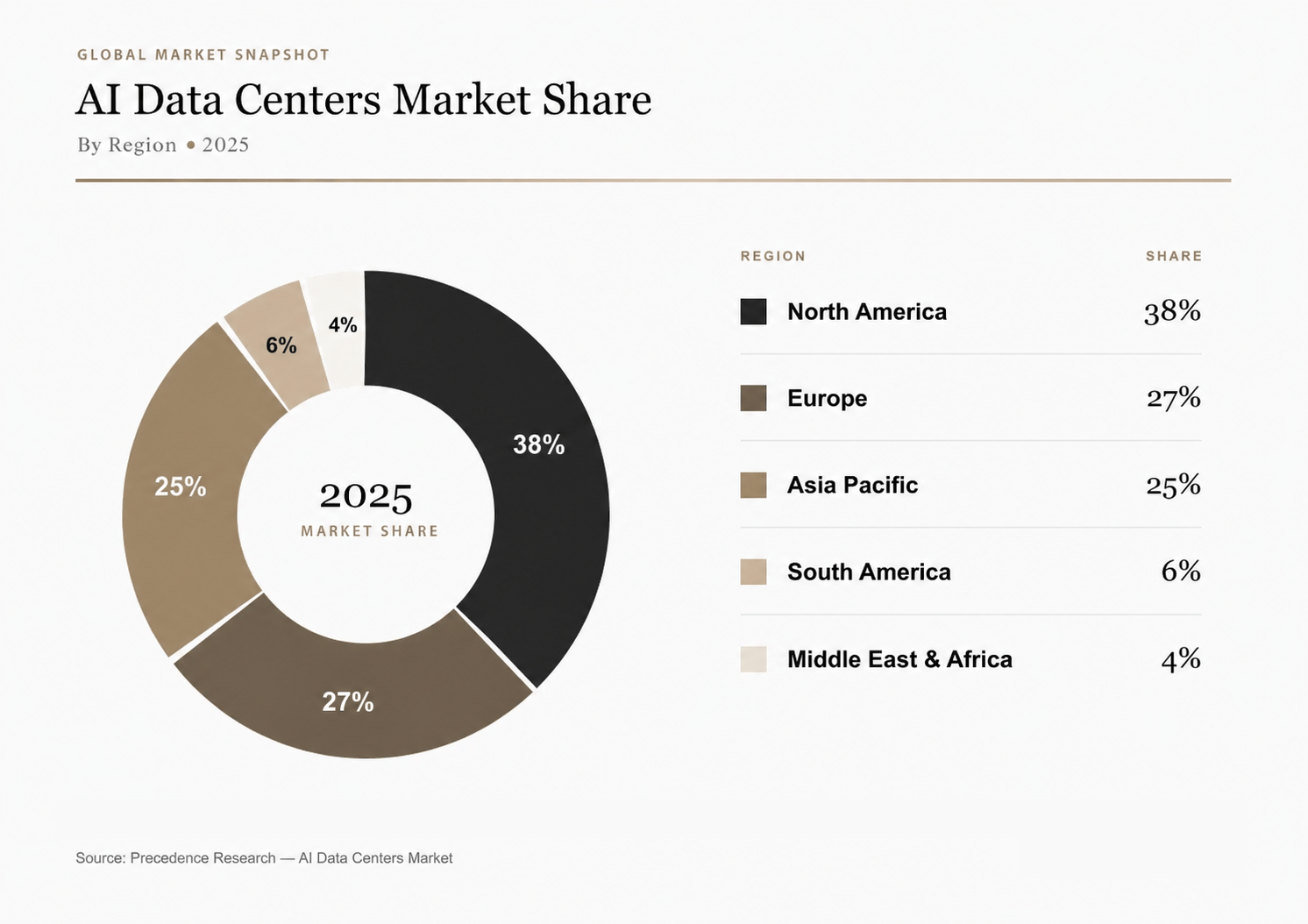
AI has an electricity problem

Data centres consumed roughly 485 terawatt-hours of electricity globally in 2025. The International Energy Agency expects that figure to reach around 950 TWh by 2030, while electricity consumption from AI-focused data centres is expected to triple over the same period. (iea.org)
To put 950 TWh into perspective, that is roughly comparable to the annual electricity consumption of an entire major industrialised economy.
But the challenge isn’t simply how much electricity AI consumes. It is where and when that power is needed.
A large AI data centre can concentrate enormous electricity demand in a single location. The IEA estimates that by 2027, one advanced AI server rack, roughly the size of a refrigerator, could have a peak electricity demand comparable to 65 households. A modern data centre may contain thousands of racks. (iea.org)
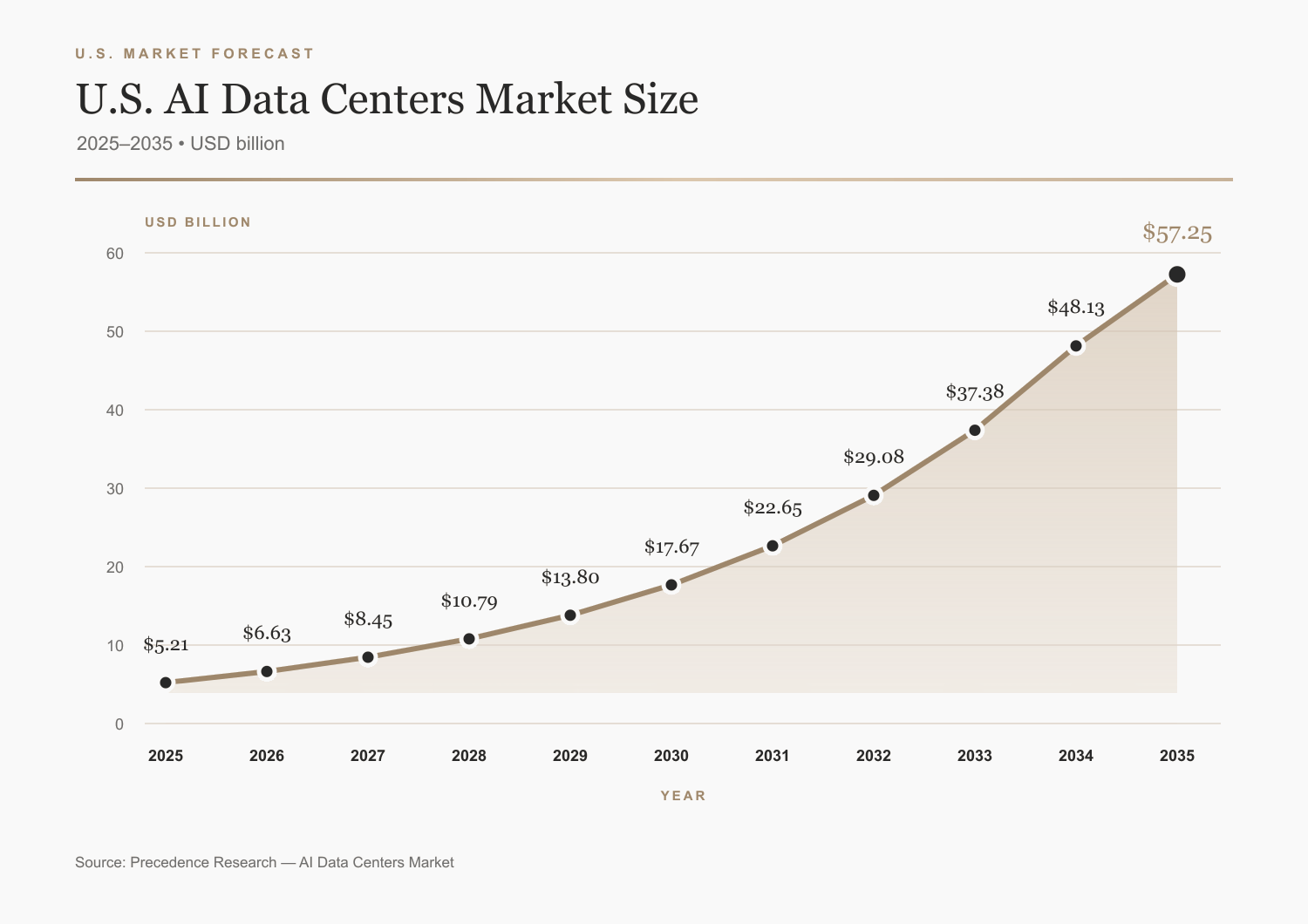
That creates a very different challenge for an electricity grid than millions of homes spread across a country.
New substations, transmission lines, transformers, generation capacity and energy-storage systems may all be required. Yet a data centre can sometimes be built faster than the infrastructure needed to power it. Transformers, turbines and grid connections are already emerging as important bottlenecks. (iea.org)
Why does AI need water?

Almost all the electricity entering a server eventually becomes heat.
Think of thousands of extremely powerful computers operating inside the same building, continuously, day and night. Without effective cooling, temperatures would quickly rise beyond safe operating levels.
Water is one of the most effective ways to remove that heat. In many data centres, water moves through cooling systems or is evaporated through cooling towers to carry heat away from the servers.
In 2023, U.S. data centres directly consumed approximately 66 billion litres of water. That is enough to fill roughly 26,000 Olympic-sized swimming pools. Berkeley Lab estimates that U.S. data-centre water consumption could rise to approximately 140–280 billion litres annually by 2028, depending on how the industry develops.
Cooling technology is improving. Microsoft, for example, has introduced new AI data-centre designs intended to eliminate ongoing municipal water consumption for cooling through closed-loop chip-level cooling systems.
But lower water consumption does not remove the broader resource challenge. AI infrastructure still requires enormous quantities of electricity, equipment and physical materials.
AI is also accelerating demand for chips, memory and data storage, as larger models require more computing power, faster access to data and significantly greater storage capacity.
The commodity supply chain behind AI
The AI boom therefore extends far beyond semiconductors. Building the infrastructure needed to support it is likely to increase demand across several commodity markets:
- Copper: transformers, substations, power cables, cooling systems and data-centre electrical infrastructure.
- Aluminium: transmission lines, electrical equipment and data-centre structures.
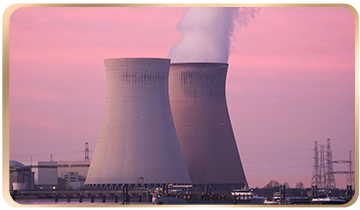
- Uranium: increasingly relevant as technology companies look toward nuclear power for reliable 24-hour electricity.
- Natural gas: an important source of dispatchable power as electricity demand rises faster than some grids can add renewable capacity.
- Lithium, nickel and graphite: essential for batteries used in grid-scale storage and data-centre backup systems.
- Silver: widely used in electronics, electrical contacts and renewable-energy technologies.
- Silicon: fundamental to semiconductors and solar power generation.
- Rare earth elements: required in electrical equipment, motors, wind turbines and other technologies supporting an expanded power system.
- The AI revolution may be digital at the point of use, but its foundations are unmistakably physical.
Behind every new model sits a chain of data centres, power stations, transmission networks, cooling systems, mines and processing facilities. As investment continues to flow into artificial intelligence, understanding those supporting industries may prove just as important as understanding AI itself.
