
The energy transition is not a choice between oil and renewables
The energy transition is not a choice between oil and renewables
The world is becoming less dependent on the Gulf over the long term, but recent supply disruptions show why conventional energy remains strategically important.
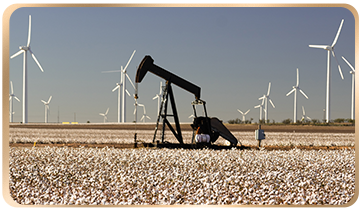
For decades, the global energy debate has been presented as a choice between two opposing systems. On one side are oil and gas, the fuels that powered industrialisation and continue to support transport, manufacturing and global trade. On the other are renewable technologies, expected eventually to replace fossil fuels as the foundation of a cleaner economy.
The reality is considerably more complex. The energy transition is not eliminating the need for conventional energy overnight. Instead, it is creating a period in which the world must expand renewable generation while continuing to invest in oil, gas, electricity networks and other forms of dependable capacity.
The ongoing conflict in the Middle East has exposed this tension in the most direct way. Although the global economy is gradually diversifying its sources of energy, the disruption to Gulf exports has shown that the region remains critical to short-term energy security.
The Gulf’s influence is changing, not disappearing
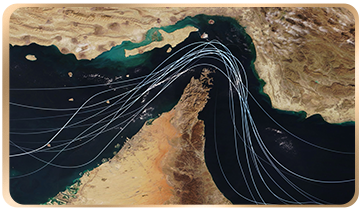
Approximately 20 million barrels of oil and around one-fifth of internationally traded liquefied natural gas passed through the Strait of Hormuz before the conflict. When war began between the United States, Israel and Iran in February 2026, that concentration became an immediate supply shock rather than a hypothetical risk.
Oil flows through the strait fell sharply, Gulf producers were forced to shut in output, and physical crude prices surged to around $144 a barrel. Prices for jet fuel and diesel rose even more sharply, while the International Energy Agency coordinated a record release of 400 million barrels from emergency reserves.
A June agreement allowed traffic and Gulf production to recover partially, but renewed hostilities in July again reduced vessel movements. The disruption has already depleted inventories, altered trade routes and raised the cost of crude oil, refined fuels and shipping.
The longer-term picture is more balanced. Higher production outside the region, alternative export routes, electric vehicles and efficiency improvements are gradually reducing dependence on Gulf oil. The events of 2026 therefore reveal two realities at once: the Gulf has less structural leverage than during the oil shocks of the twentieth century, but it can still trigger a severe short-term energy crisis.
Electricity is becoming the central energy market
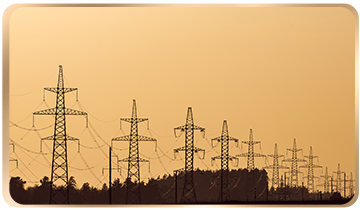
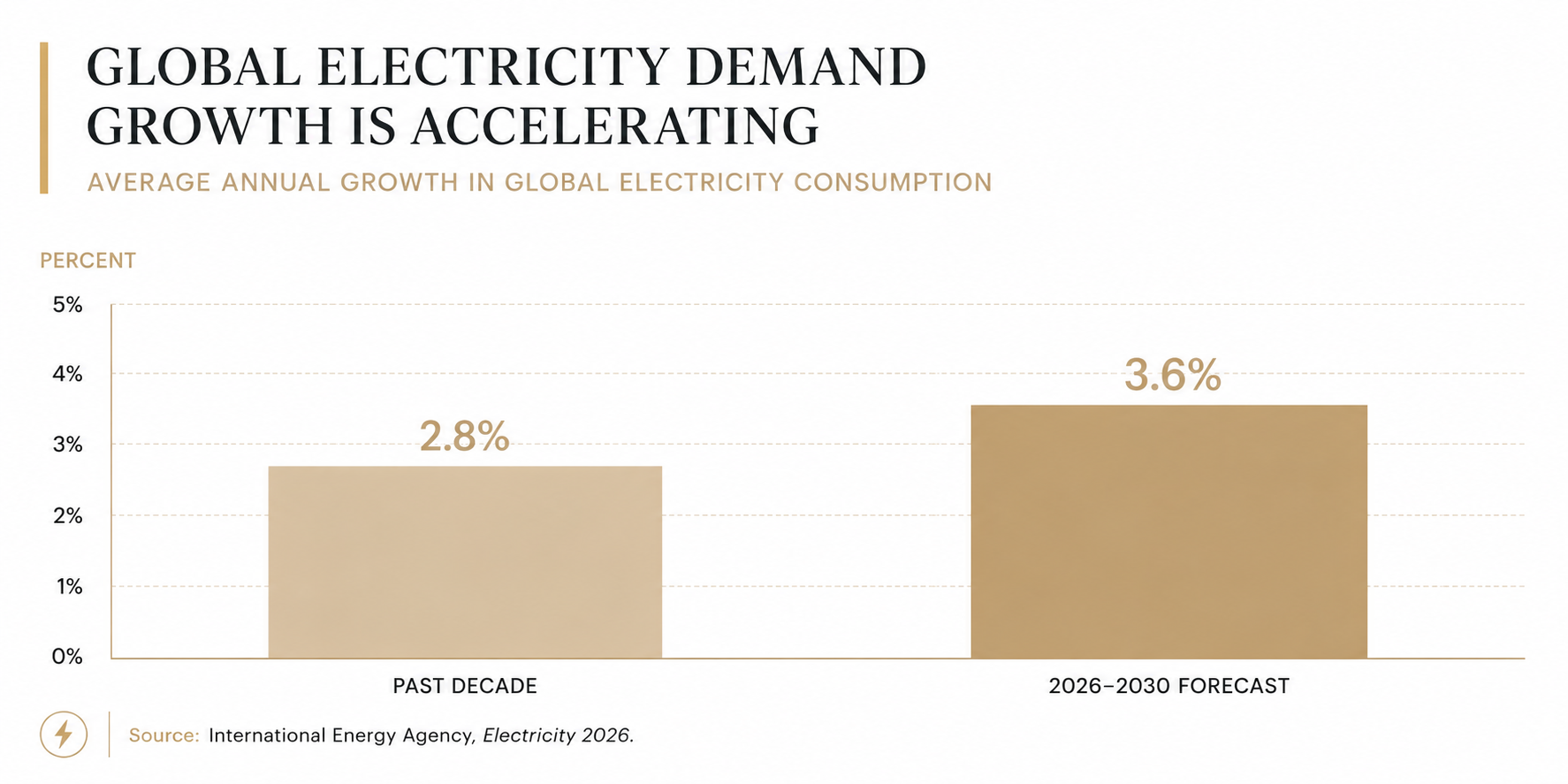
While oil-demand growth is slowing, electricity consumption is accelerating.
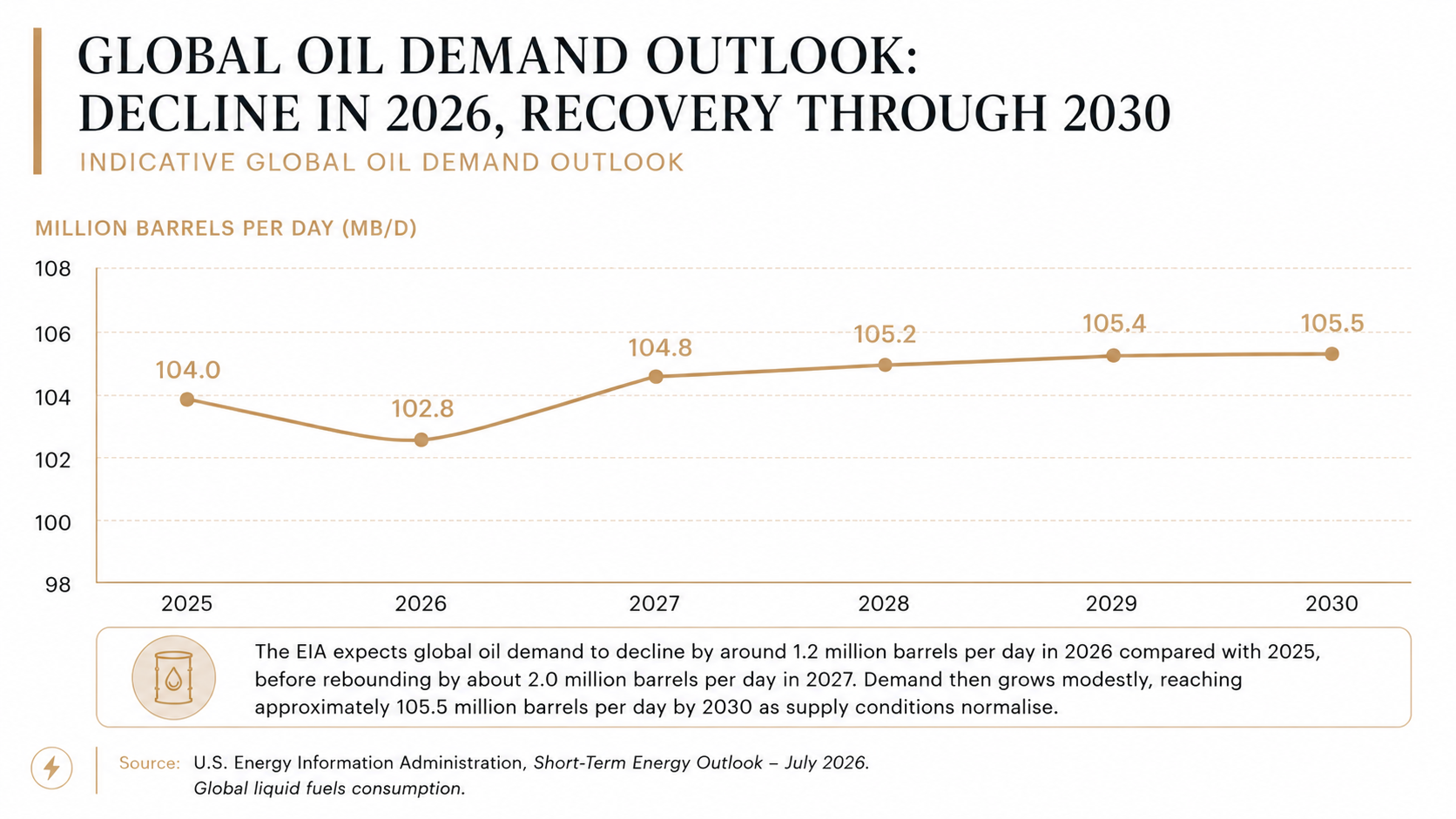
The International Energy Agency (IEA) forecasts that global electricity demand will expand by an average of approximately 3.6% annually between 2026 and 2030. Industrial activity, electric vehicles, air conditioning, and data centres are all contributing to that increase.
Artificial intelligence is adding another layer of demand. Global data-centre electricity consumption is projected to more than double by 2030, with renewables expected to provide nearly half of the additional supply. Natural gas, coal and nuclear power will also contribute, illustrating why no single technology can satisfy the entire increase on its own.
This shift fundamentally changes the nature of energy investment. The opportunity is no longer limited to companies that produce fuel. It extends across the infrastructure required to generate, transmit, store and manage electricity.
Renewable developers will require turbines, solar equipment and project financing. Electricity networks will need transformers, substations and high-voltage transmission lines. Intermittent generation will create demand for battery storage, flexible gas-fired power plants and demand-management technologies. Growing electricity consumption will also increase the importance of grid efficiency and energy conservation.
In other words, the energy transition is as much an infrastructure expansion as it is a change in the source of power.
Renewable growth does not eliminate conventional energy
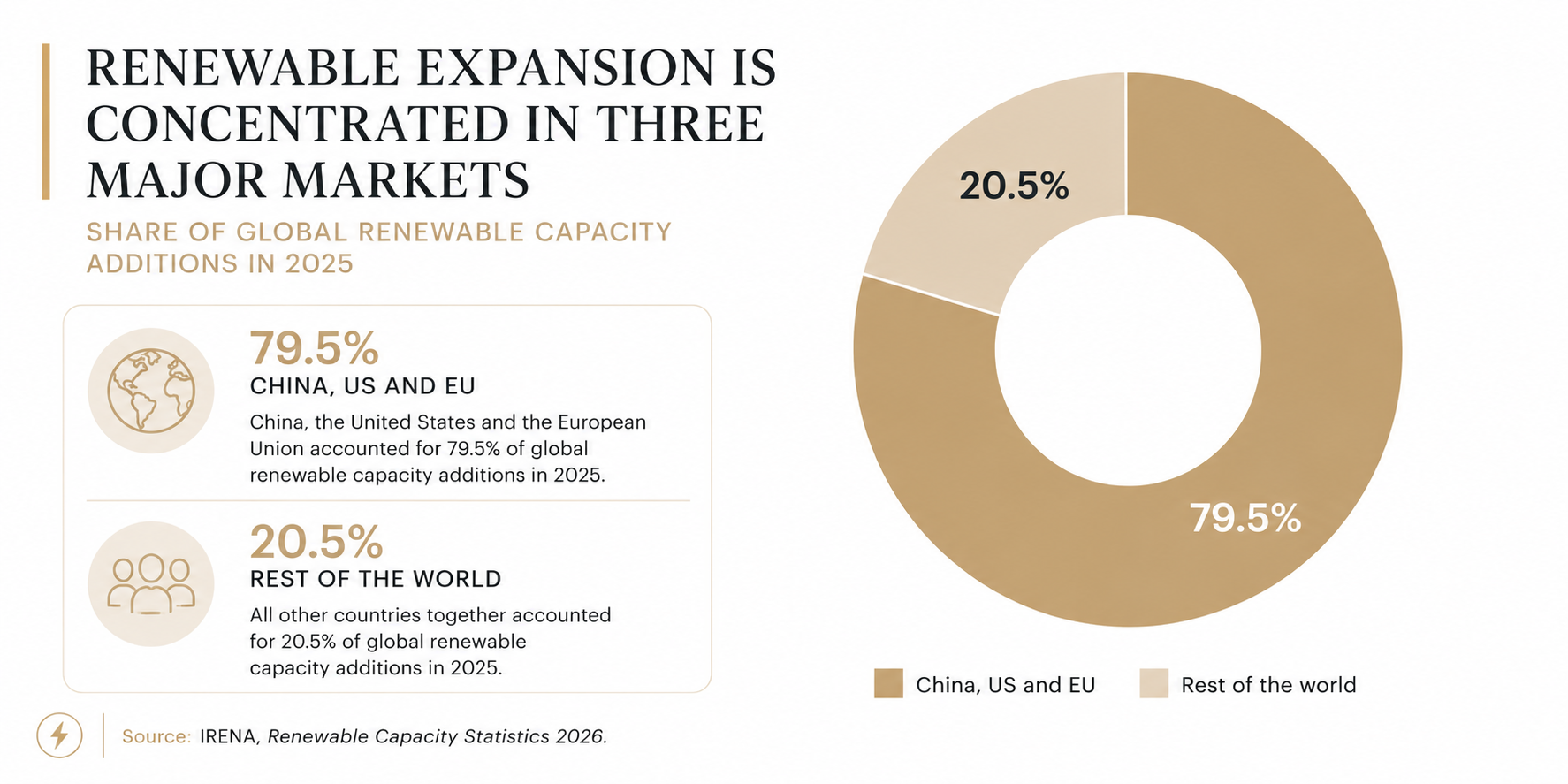
The rapid growth of renewable capacity is undeniable. China, the United States and the European Union together accounted for almost 80% of new renewable capacity installed globally in 2025.
Renewables are increasingly competitive because they have no ongoing fuel cost and can often be installed faster than large conventional power stations. Nevertheless, they still require capital, maintenance, grid connections and complementary infrastructure.
Wind and solar production vary with weather conditions. Electricity grids must therefore balance their output with storage, interconnection, flexible generation or controllable sources such as natural gas, hydropower and nuclear energy. Building those complementary systems requires significant capital and, in many countries, years of regulatory approval.
- Oil presents a similar paradox. Long-term demand growth is weakening, but the industry still requires investment. Existing fields naturally decline, meaning that new production must be developed simply to maintain supply. When investment falls too far, the market becomes more vulnerable to geopolitical events, infrastructure failures and sudden increases in consumption.
- Periods of high prices may encourage new production, but major energy projects cannot be delivered immediately. Exploration, permitting, construction and pipeline development frequently take years. The consequence is a market in which short-term supply can remain constrained even as the long-term demand outlook becomes less attractive.
Investor takeaway
The central lesson is that energy should not be divided into simplistic categories of old and new.
Renewable generation may provide substantial long-term growth, but project economics, financing costs and electricity prices still matter. Oil and gas companies may benefit from supply constraints, yet they face commodity volatility and the possibility of slower future demand.
- Potential opportunities may therefore be found across the wider energy value chain: grid equipment, electricity storage, efficiency technologies, engineering services, natural gas infrastructure, conventional producers with disciplined capital allocation and companies supplying the minerals and components required for electrification.
The Gulf’s grip on the global economy may be gradually weakening, but the recent crisis has shown that energy security cannot be taken for granted. At the same time, rising electricity consumption is creating an investment cycle that extends far beyond renewable-power generation alone.
The coming decades will not be defined by a sudden replacement of oil with wind and solar. They will be defined by the construction of a larger, more diversified and increasingly interconnected energy system.
For investors, the winning strategy may not be to choose between conventional and renewable energy, but to identify the businesses needed to make both systems operate reliably.