
Is private credit threatening traditional bank lending?
Is private credit threatening traditional bank lending?

For generations, when a company needed money to expand, acquire a competitor, or refinance its debt, there was an obvious place to go: the bank.
That relationship is beginning to change. A rapidly growing segment of the financial system, known as private credit, allows companies to borrow directly from investment funds rather than relying on traditional banks. What began largely as an alternative source of finance for smaller or riskier businesses has evolved into a market measured in the trillions of dollars globally.
The question is no longer whether private credit can compete with banks. It is how much of the lending market it can ultimately take from them.
What exactly is private credit?

Private credit is, simply put, lending provided by institutions other than banks. Investment funds raise capital from investors such as pension funds, insurers and other institutions, then lend that money directly to companies.
Unlike publicly traded bonds, these loans are privately negotiated. Their terms can therefore be tailored closely to the borrower, from repayment schedules and interest rates to collateral and financial conditions.
That flexibility is part of their appeal. Private lenders can often move quickly, negotiate directly with management and finance transactions that may be too complex, leveraged or specialised for a traditional bank. Borrowers have historically been willing to pay more for that speed, certainty and customisation.
Why are companies moving beyond banks?

The rise of private credit did not happen in isolation. Following the global financial crisis, banks faced stricter capital and regulatory requirements. Certain forms of corporate lending became more expensive or less attractive for them to hold on their balance sheets. Private investment firms increasingly moved into the space that banks were leaving behind.
At the same time, institutional investors were seeking investments capable of generating attractive income over long periods.
The result was a natural match: companies needed capital, and investors were willing to provide it.
- The US private credit market is the largest and most developed globally, making it a useful indicator of how the broader lending landscape may evolve elsewhere.
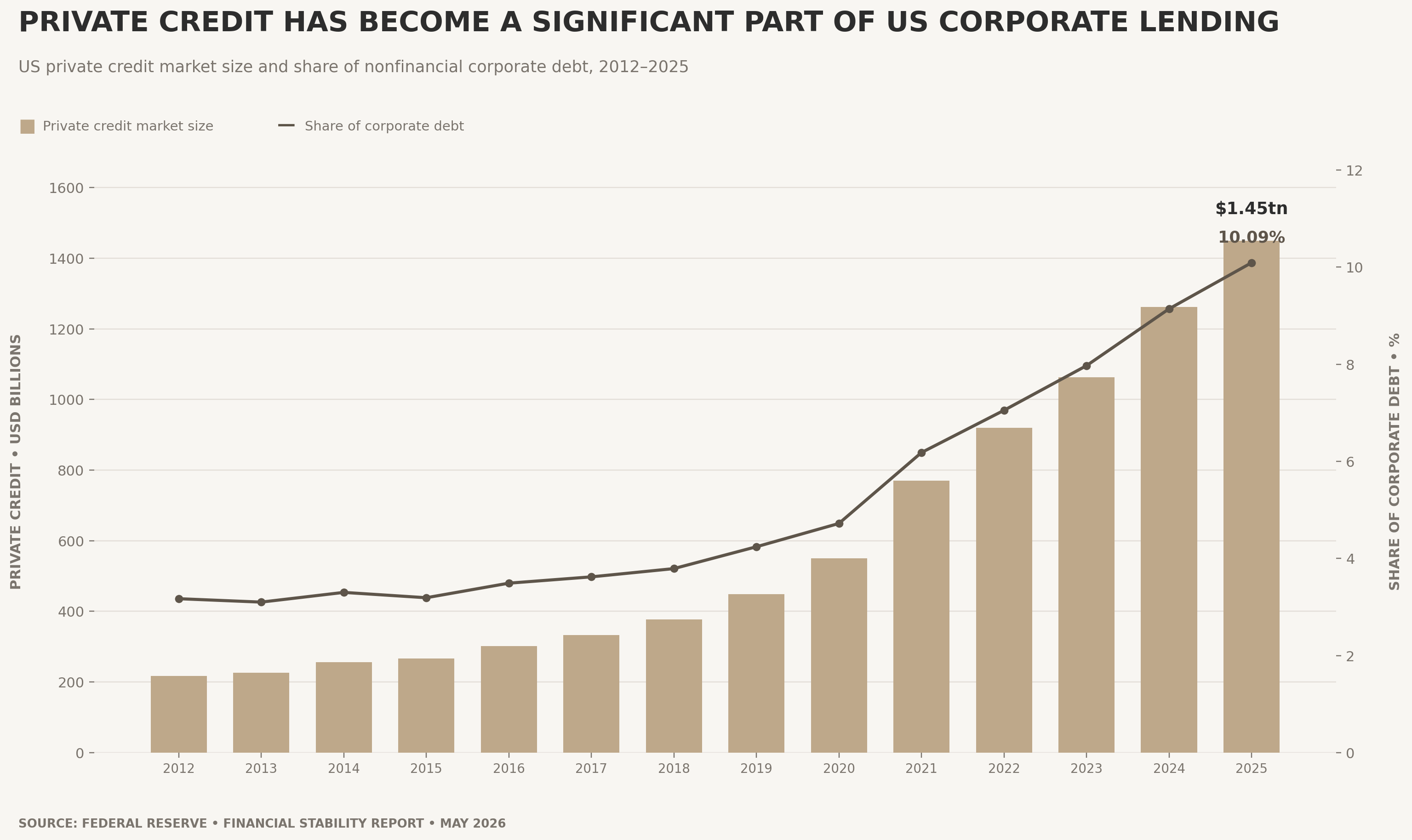
The scale of that shift has become increasingly visible. In the United States, the Federal Reserve noted that banks’ share of corporate lending fell from 48% in 2015 to 29% in 2025, while the US private credit market reached approximately $1.4 trillion.
Are banks actually being replaced?
Not quite. Banks retain advantages that private credit funds cannot easily reproduce. Deposits provide banks with a relatively low-cost source of funding, while their scale allows them to serve everything from households and small businesses to the world’s largest corporations.
More importantly, private credit and traditional banking are not completely separate systems. Banks increasingly provide financing to the private credit funds that subsequently lend to companies. Federal Reserve research describes an emerging chain in which banks lend to private credit providers, which then extend credit to businesses.
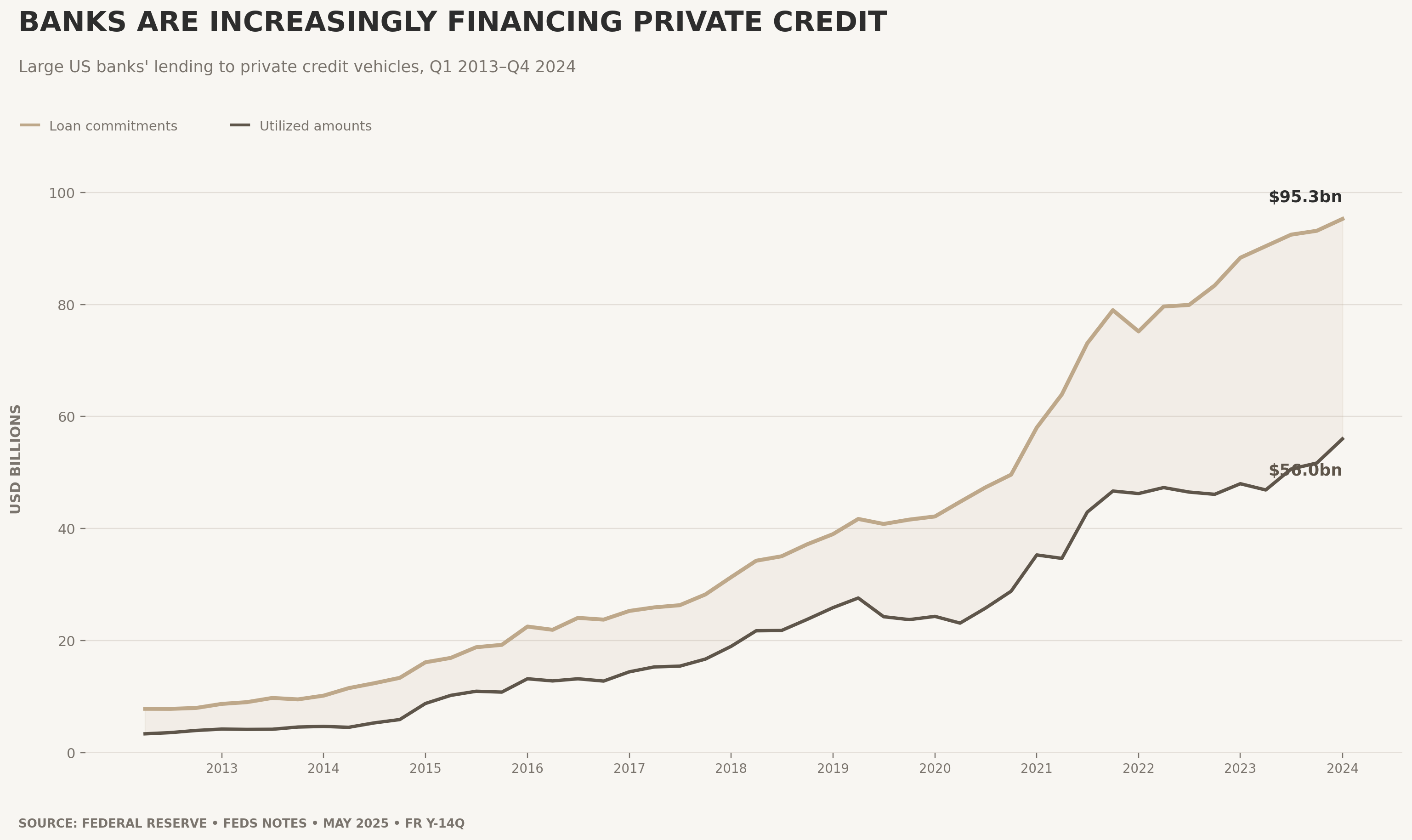
- In other words, banks may be losing some direct lending business while simultaneously financing the institutions taking it from them.
The risks behind the growth

Private credit also introduces questions that become more important as the market expands. Because loans are privately negotiated and rarely traded, valuations can be less transparent than in public markets. Regulators have also highlighted potential vulnerabilities involving leverage, borrower quality, and growing connections between private credit funds and banks. Crucially, today’s private credit market has not yet been tested at its current scale through a severe economic downturn.
That does not necessarily make private credit inherently more dangerous. However, rapid growth in any form of lending deserves attention.
A changing lending landscape

Private credit is unlikely to make banks obsolete. What it is doing, however, is challenging one of their oldest roles: acting as the primary bridge between capital and businesses that need it.
The future may therefore be less about private credit replacing banks and more about a financial system in which the two increasingly compete, finance one another and share the lending market.
For companies seeking capital and investors looking for income, that shift could become one of the most important changes in modern finance.