
Is Brexit good for the UK economy?
Is Brexit good for the UK economy?
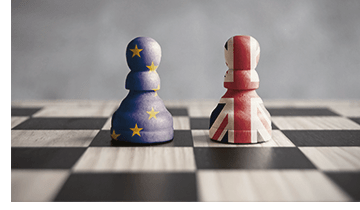
The start of 2021 marked the end of the transition period for the UK to complete Brexit. About 51.89% of people voted to leave whereas 48.1% voted to remain. One could say that given the weight of the task, the margin of the vote was too thin to go ahead. Yet nevertheless had to be carried out.
The five transitory years that followed the Brexit vote saw political turmoil in the UK with snap elections. Finally as the transition period ended, the UK was able to carve out a deal, which to many appeared as a last ditch effort to prevent a no deal scenario.
Reasons for Brexit
Before we look at the impact of Brexit, let us take a quick look at the reason for Brexit. UK had been a member of the EU since 1973 but in 2016, about 51.89% of the voters decided to leave the EU. Why? Because in their opinion the advantages of free trade by virtue of being a part of the EU were not enough to offset the costs of free movement and migration of Europeans to the UK.
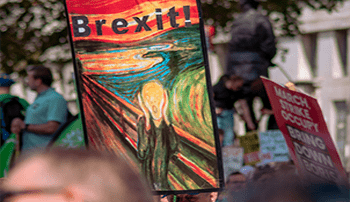
Although Brexit may have had socio-economic reasons, it proved to be a dagger in the heart of globalisation. It marked a return to nationalism but whether Brexit was the first of many exits from the EU, is a debate for another time.
The primary reason for Brexit was the economic impact of immigration to the UK. Those who voted to leave, felt that immigrants were taking over local jobs, thereby putting the locals at a disadvantage. This opinion was expressed in the vote and it took UK almost five years to transition. What remains to be seen now is the economic impact of this move.
Economic impact of Brexit
In order to make it easy to understand the impact of Brexit, it is better to divide it into three categories.

The transition period lasted for almost five years. Whatever happened during the transition period can be seen as an indicator of what is to happen in the post Brexit era. However it must also be remembered that the transition period was marked by uncertainty, as both the UK and EU kept going back and forth on the trade deal. It was this uncertainty that diluted the impact on the economic indicators.
Similarly, the UK not only has to deal with the economic impact of the exit in 2021 but also the socio-economic impact of the Covid19 pandemic. Here once again the pandemic has diluted the economic indicators.
The transition phase
The impact of Brexit started right after the referendum. The Pound Sterling devalued and an environment of uncertainty gripped the country. As the talks of a trade deal went back and forth during the five years, many businesses prepared for the inevitable. Even before the trade deal was agreed, it became clear for many businesses that they would have to relocate to the EU, taking away a lot of jobs and revenue in the process.

Not only EU based business but UK and American businesses also faced disruption. For the UK based businesses, Brexit meant a drastic reduction in the reach and market size. Many UK based businesses that had customers in Europe, now had to either risk losing those customers or open branches in the EU, which would end up draining resources and ironically creating more jobs in the EU.
Similarly, the American businesses in the financial sector in particular, used the UK as a gateway into the EU. With Brexit this is no longer possible but this can be seen in two ways.
Firstly, this means that the American businesses will need to invest separately into the EU to expand into the European market. Secondly, with Brexit, the UK is eager to strike a big trade deal with the USA. This can therefore provide a good opportunity for American investors to invest into the UK economy, which is looking for support. The current bilateral investment between both countries stands at over $1300 billion, with the US investing around $850 billion into the UK in 2019 alone.
Thus, the transition period was marked with:
Pandemic and 2021
As stated above the impact of the pandemic and the trade deal have overlapped. Nevertheless it can be seen that the eventual exit and the trade deal have negatively impacted multiple sectors of the UK economy.

The post trade deal disruption was expected and this should not be seen as long term disruption. It will take quite some time for the supply chain issues to sort out. During this time, almost all economic experts are of the opinion that the economy of the UK will shrink in the foreseeable future. Brexit has diminished the role of London as the financial hub of Europe and over time more businesses will move out of the UK into the EU to benefit from the greater market.
Inflation will rise in the short term due to supply chain management issues but in the long term, as the situation normalizes, inflation will come down.
Unemployment has shot up in the short term due to both Brexit and the pandemic. Many European workers have left, leaving behind job vacancies that need to be fulfilled. It will take time for this structural unemployment to reduce because the local labor will need to be upskilled for the vacant job roles that were previously taken over by the immigrants from Europe.
While the UK still has the EU as its greatest trading partner, it is expected that US-UK trade will develop and this will open the UK to American investment, which can be a good sign as the US is not bound by the trade deal struck with the EU.
The UK in the foreseeable future will continue to exist in its diminished state but it is far too early to draw any meaningful conclusion because the effects of the pandemic have diluted the indicators and dampened economic progress. The UK economy needs to be observed over the next three to five years, to draw any meaningful conclusion about the impact of Brexit.