
How the oil & gas industry could make the switch
How the Oil & Gas industry could make the switch to geothermal by 2050

It's no secret that the world is in the midst of an energy transition. With renewables on the rise and fossil fuels on the decline, many industries are looking to make the switch to geothermal.
Operators in the oil and gas industry have long been sceptical of geothermal energy. The technology is seen as expensive and unreliable, particularly compared to traditional forms of energy generation.
However, a growing number of experts believe that geothermal could play a major role in the industry's future. In this article, we'll take a look at how the oil and gas industry can play a pivotal role in makeing the switch to geothermal by 2050.
What is the Paris Agreement?
The United Nations Paris Agreement on climate change is one of the most significant international agreements in history. Successful negotiations were made possible by a historic agreement between China and the United States, two countries that are responsible for almost 40% of global greenhouse gas emissions.

Under this accord, 195 countries have committed to keeping average temperature increases below 2°C above pre-industrial levels. To that end, each nation has submitted its own climate change plan to the United Nations.
The Paris Agreement focuses on the usage of renewable energy sources to replace fossil fuels. Renewables such as solar, wind, hydro and geothermal energy have been around for a long time. The problem with renewables is on the scalability front.
Scalability and funding issues
Scaling up the existing renewables requires a considerable amount of funding for research, development and deployment. This funding will inevitably come from big investors, who are motivated by profits instead of social and environmental causes. To this end, big investors have always favoured oil and gas over renewables. The Paris Agreement aims to divert this flow of funds to renewables, through the consensus of all stakeholders.
What is geothermal energy?
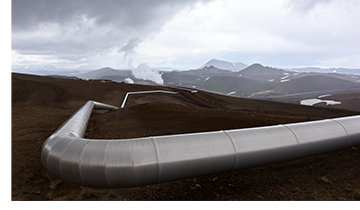
Geothermal energy is simply heat derived from the Earth. Countries like Iceland and Indonesia are surrounded by volcanoes and this gives them plenty of near-surface pockets of lava that can be used to harness geothermal energy.
Geothermal energy is not a new find, ancient Romans used geothermal energy to heat their communal bathhouses. Hot water springs are present in numerous locations throughout the world, in many regions these hot water springs are seen as sacred as their water carries up minerals from the earth that possess healing properties.
At present almost 20 countries actively use geothermal energy at a small scale to medium scale. Pipes up to a depth of 1 mile have to be dug, to access subsurface pockets of heat. Heat present under the surface of the earth in the form of hot water and steam is funnelled through pipes to heat up homes and buildings, in winters. During summers, the same pipes transfer heat from homes and buildings back into the earth.
Geothermal Energy has been around for a long time and has allowed civilizations to flourish in areas such as Iceland, which would otherwise be too cold to live in because geothermal heating keeps homes warm.
However geothermal energy isn't just a luxury, it's also been used to provide power in remote regions of the world that would otherwise be cut off from electricity. Although El Salvador is not exactly remote, it uses geothermal energy to power up 30% of the national grid.
These applications however are very limited in scale. If geothermal energy is to replace oil and gas, it needs to be scaled up. A significant amount of funding needs to be put into research and development starting today if we are to develop the capacity to bank on geothermal energy instead of oil and gas.
Why geothermal energy?
In order to make geothermal energy a viable alternative to oil and gas, it needs to be cheaper than these traditional fossil fuels. This is where geothermal has a major advantage over other renewables. For example, geothermal plants don't need a lot of land, unlike wind farms that require significant open space to generate adequate power.
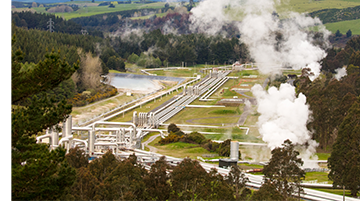
Secondly, geothermal plants have a shorter construction time and geothermal power generation is less intermittent. Geothermal water can be heated quickly, unlike other renewables where it takes a significant amount of time to get the plant up and running, so the quick start makes geothermal more suitable for baseload power needs.
Geothermal energy has the potential to provide reliable baseload power. Unlike oil, gas or hydropower plants, geothermal energy plants do not need any fuel. The energy comes directly from subsurface heat pockets that provide energy constantly at a steady rate.
How can the transition take place?
If the global leaders are serious about the Paris Agreement, then they will have to convince the oil and gas industry to play their role. Inevitably, the momentum to transition to renewables such as geothermal energy needs to come from oil and gas producers.
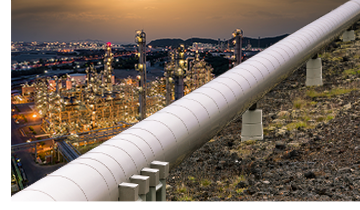
While solar, wind, hydro and hydrogen fuel cell production require different technologies and competencies. Geothermal energy requires similar technical expertise that the oil and gas companies currently have. This makes scaling up geothermal operations easier if we can leverage the current technological competency of the oil and gas sector.
Geothermal energy has to be extracted through mile-deep pipes. If there is any sector that specializes in deep earth drilling techniques then it is the oil and gas sector.
The past couple of decades have seen major technological leaps in the oil and gas industry. The shale revolution brought forth techniques such as hydraulic fracturing and directional drilling. These advancements allow us to drill more efficiently for resources both onshore as well as offshore.
These techniques can be used to look for viable geothermal spots around dense urban centres and engineer the subsurface heat pockets to develop geothermal plants that can power up entire cities. The oil and gas industry has the right technical competency, technology, labour and scale of operations to carry out this task.
Investor Takeaway:
Oil and gas companies are likely to be around for the next few decades but their business model is under threat by the race between fossil fuel stock depletion and global warming. Chances are that global warming will end up damaging their business model faster than stock depletion, so it’s important that they come up with a plan.
The Paris Agreement is an excellent first step towards transitioning the world from fossil fuels to renewable sources of energy. While solar, wind and hydropower get most of the limelight, geothermal energy has significant potential to replace oil and gas as fuel.
One way this could happen is if the oil and gas sectors use their skills and expertise to develop geothermal production infrastructure and build up the capacity to gradually transition from oil and gas to geothermal after 2050.
In order for this transition to happen smoothly, it will need everyone involved—especially those who have been working with these resources for decades. Those employed in the oil and gas sector can help speed up this process by developing skills around geothermal technology so they are ready when the time comes.