
How important is helium in today's world
How important is Helium in today's World

There are few elements on the periodic table as versatile and ubiquitous as Helium. Derived from Greek for ‘sun’, helium is an essential component of our modern world. While its existence was discovered in 1868, it wasn’t until 1923 that American researchers discovered how to extract the element from natural gas sources, thus making it viable for industrial use all around the world. The uses, applications and significance of Helium have grown since then, with investors recognizing its potential value year after year. As such, in this article we will explore how important Helium is today and why investors should be paying attention to it now more than ever before.
Industrial applications of helium
When most people think of helium, they get a picture of a bunch of balloons floating up into the sky. But did you know that helium is actually an incredibly important industrial gas? The most abundant gas in the universe which ironically is rare on earth has some unique properties that make it an essential resource for a variety of industries and supply chains.
Its low boiling point makes it ideal for cryogenics and cooling processes such as MRI scanners; its low electrical resistance allows it to be used within welding applications; and because of its non-flammability, helium is often employed in gas balloons and airships. On a larger scale, helium is now used in the manufacturing of fibre optics, in nuclear power plants to cool reactor cores, and even for deep-sea diving to prevent decompression sickness from excess oxygen and nitrogen.

Helium is also used in gas chromatography (a technique used to separate and analyze complex mixtures) and perhaps its most popular usage is in the aerospace industry for space exploration. A single space launch uses up approximately $12 million worth of helium. NASA uses up to 100 million cubic feet of helium per year, whereas SpaceX uses up to 75 million cubic feet of helium per year. From NASA to SpaceX, helium is used to pressurize rocket fuel tanks, control turbopumps and clean out hydrogen lines.
The worldwide utilization of helium in 2021 was distributed across several industries, with MRI scanners and semiconductor/fiber markets making up the largest portions at 32% and 18%, respectively.
Source: Mordor intelligence
Prior to 2021, the aerospace sector was the largest growing sector for helium but the covid-19 pandemic pushed the healthcare sector to take the lead for the highest demand for helium.
In the medium-term outlook, the healthcare and semiconductor sectors are expected to drive the global demand for helium.
Current market conditions
The United States has one of the largest supplies of helium in the world, with production reaching an estimated 77 million cubic meters. This puts the United States at the forefront when it comes to international output and access for industries reliant on such a vital resource. United States is followed closely by Qatar, Algeria and Russia.
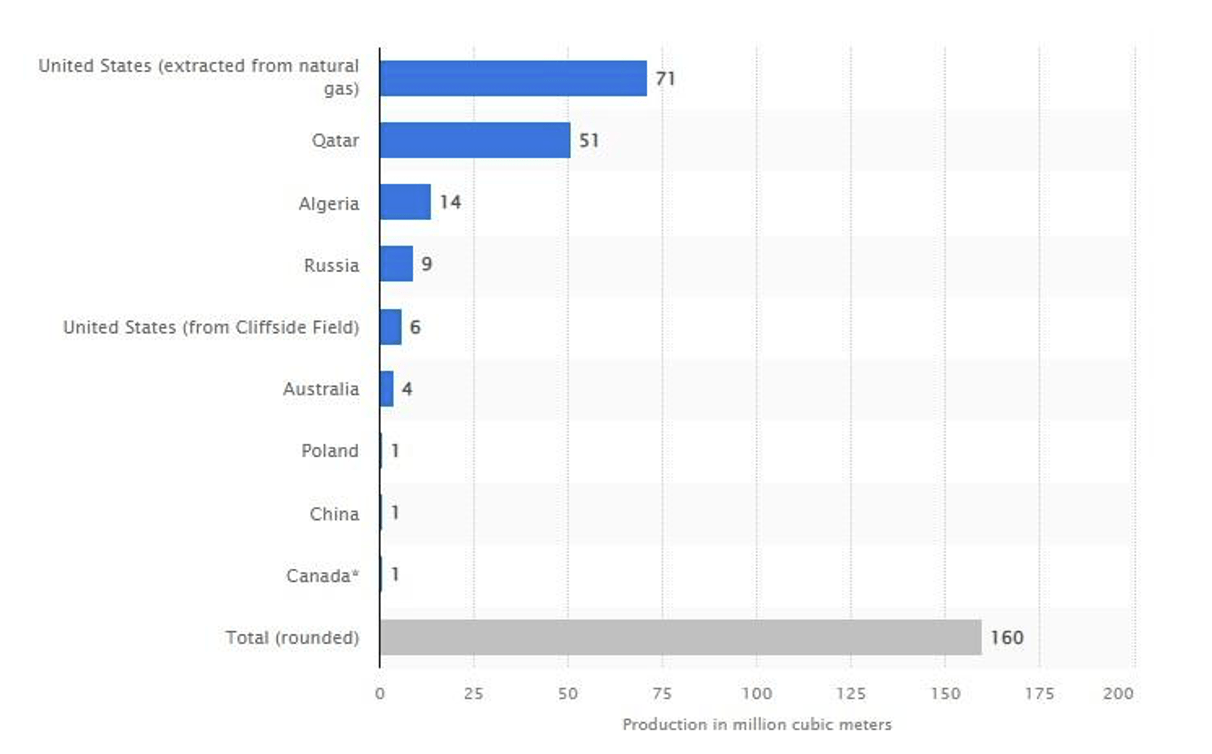
The helium market went through global shortages in 2006, 2007, 2011 and 2013. The last ten years saw a stable supply of helium but a series of unfortunate events in some of the biggest gas processing plants in the US and Russia in 2022 has reduced the global supply leading to price shocks.
According to Phil Kornbluth, a helium industry consultant

“The world has experienced eight years of helium shortage in the last 17. It’s been a pretty unreliable supply chain,” he said, noting war in Ukraine has indefinitely disrupted Russia’s supply of helium to the global marketplace. “The prices of helium in many cases have doubled since January 2022. Contract prices have increased 50 to 100%, in some cases, even more.”
In spite of these supply shocks, the booming demand for helium worldwide presents a lucrative opportunity as global consumption is estimated to reach almost 7 billion cubic feet per annum with a CAGR of 4% to 5% by 2028.
The future of helium
Source: Mordor intelligence
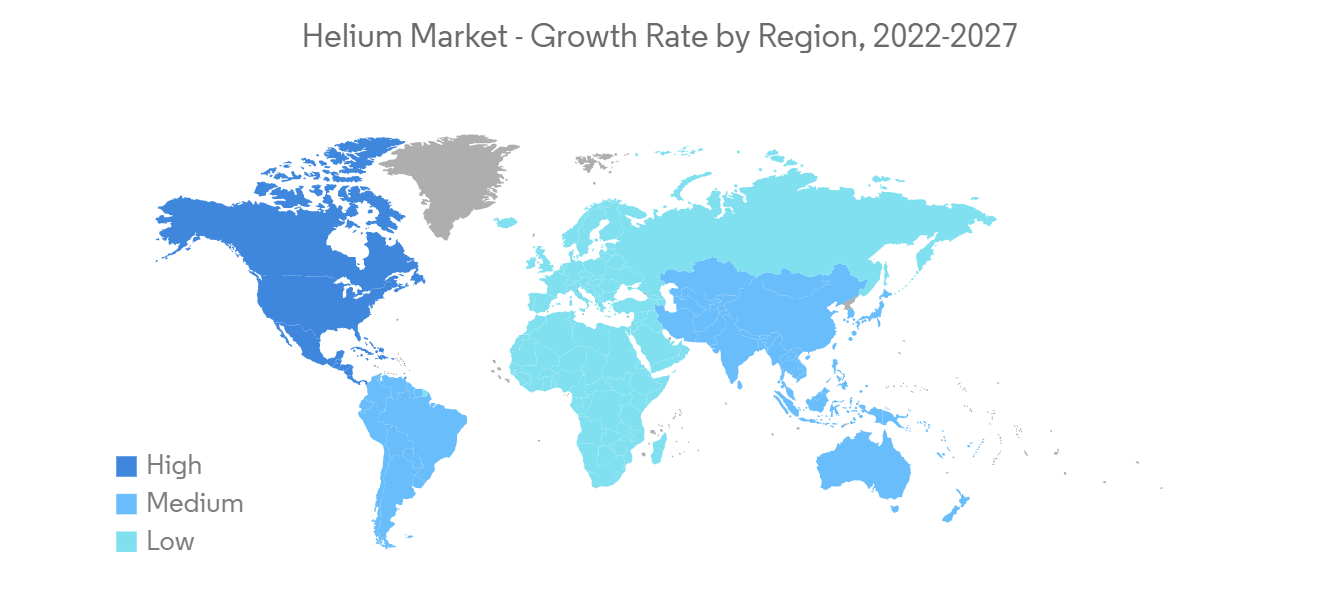
Currently, this market is valued at over USD 4 billion; an increase of 135% in the unit price (USD) was seen in the past few years. The biggest consumer of helium at present is North America but Asia Pacific is quickly rising up as the emerging market for helium, with China, India, Japan and Korea leading the charge at the back of their industrial growth.
The future demand for helium will be largely driven by the healthcare and semi conductor sectors. Further research into helium extraction and storage is expected to play a crucial role in the future of helium.
Given the essential role, helium plays in many industries, an investment in a helium-related product can be a smart choice for any investor looking to diversify their portfolio and take advantage of market opportunities. Since the supply side market is small, with tough competition amongst a few companies, investing in a helium-related product can be an attractive option for those looking to take advantage of the increasing market demand and potential stability offered by this important element.
Investor Takeaway

In conclusion, Helium’s importance cannot be overstated. From lifesaving applications in MRI machines and semiconductors to revolutionary advances in space exploration, this element is central to our modern world. Investors should take note of this and recognize the potential opportunities that an investment in Helium can provide.
The future outlook is positive, with the potential for increased demand and shortage leading to rising prices. By investing now, investors can not only make a return on their capital but also help facilitate groundbreaking discoveries for generations to come. With its versatility and range of uses, helium is sure to remain a key element in the global economy. Therefore, an investment in Helium today is an investment in a brighter and more exciting future.