
Can the mining industry really go green?
Can the Mining Industry really go green?
When it comes to sustainability, the mining industry does not have the best of reputations. The mining industry is known better for its subpar working conditions, exploitation of labour, social and environmental pollution and contamination of water bodies. At first glance, the words mining and sustainability appear to be polar opposites.
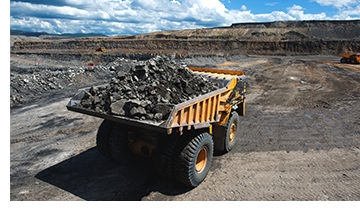
According to McKinsey, the mining industry contributes about 4% to 7% of the global greenhouse emissions annually. The Paris Agreement aims to achieve net zero emissions by 2050, if this aim is to be achieved then there is no iota of doubt that the mining industry will have to go through a radical transformation.
One can even go as far as to say that the whole weight of achieving the net zero emissions target rests upon the mining industry. Why? Although the direct contribution to greenhouse emissions is at most 7%, mining leads to the extraction of fossil fuels such as coal, oil and gas. These fuels are then used by other industries to create pollution that damages the environment.
Looking at mining from this perspective leaves only one conclusion. If the aims of the Paris Agreement are to be achieved then the mining industry needs to shut down. But this is not a feasible option because the mining industry also provides employment to millions of people globally. In addition to this, as a civilization that is leveraged upon technology, we have become dependent upon the extraction of minerals and ores to fuel the industries that support our modern lifestyle.
This also puts the industry into a paradox. If mining is the polar opposite of sustainability then at the same time, there can be no sustainable future without mining. Why? Because the metals and raw materials required for a sustainable future are all going to come through mining.
Be it lithium or gold for batteries and solar panels. Green hydrogen or silicon for smart electronics. Mining provides the raw materials for a sustainable future. It can therefore be established that no matter what the cost, the mining industry has to go green if the net zero emissions goal is to be achieved.
The question that needs to be asked now is how can the global mining industry be transformed to become green and sustainable?
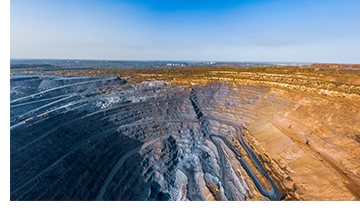
Professor Karen Hudson-Edwards of the University of Exeter believes that in order to transform mining into green mining, there is a need to focus on the mining value chain. Essentially breaking up a bigger problem into smaller chunks, to deal with each chunk separately.
Upgrading the Prospecting process
Prospecting is a process in which mining and exploration companies look for minerals in an area. Traditionally mining companies used to strip the land completely of its vegetation to look for minerals. Regulations can be enforced to ensure that mining and exploration companies use environmental and social best practices to carry out prospecting in a sustainable manner.
For instance, Cornish Lithium, a lithium extraction company uses 3D satellite imaging and historical data to map the area and assess where large deposits of lithium may be present. The usage of modern technology eliminates the need for traditional prospecting.
Autonomous Mining
Another part of the mining value chain is the fleet of transportation trucks that add to emissions in the form of exhaust fumes. To counter this, Rio Tinto has implemented autonomous technology in their iron ore mines in Western Australia. Rio Tinto now has 2.4 km long robots that transport extracted material back and forth instead of big trucks.
Decommissioning and Restoration
The process of decommissioning and restoring a mining site is one that needs to focus on. Regulations need to be enforced to ensure that mining companies restore the mining site to its natural position or create a sustainable public space. A lot of mining companies that emphasise on CSR already do this voluntarily.
The Buccleuch site in Scotland for instance is one where the mining company collaborated with the local government to plant trees on the mining site once mining operations ceased. The company also built a pumped up hydro storage site to generate renewable energy for the area.
Decarbonization
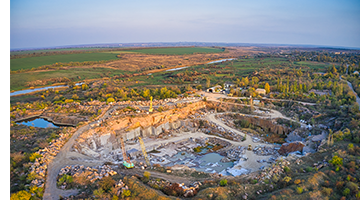
Decarbonization refers to the reduction or removal of carbon dioxide into the atmosphere. The term decarbonisation mining has gained a lot of traction recently, particularly in the context of green hydrogen.
According to McKinsey “Mines theoretically can fully decarbonise through operational efficiency, electrification, and renewable energy use.” A report published by McKinsey also states that green hydrogen has the potential to completely decarbonise the mining industry if it is scaled up in time.
The hydrogen industry is still in its infancy. If we look at Australia which is one of the leading countries actively investing in hydrogen as a sustainable source of energy. Then we can see that there is immense potential and interest in pushing hydrogen to replace oil in the global energy market.
Australia is collaborating with other countries to share technology, the country has also planned to set up 7 industrial hubs to create green hydrogen energy based ecosystems. Energy and mining giants in Australia such as BP, Fortescue, Arena, Anglo American and Hatch have agreed to form the Green Hydrogen Consortium. This consortium will synergise to create value and supply chains that will allow Australia to scale up hydrogen production to a large scale to not only power the industry in Australia but also export hydrogen to other countries.
A small scale pilot experiment was done in Glencore`s Raglan mine in Quebec, Canada where a hydrogen energy storage unit was connected to a wind turbine. This setup eliminated the need for diesel, reducing the emissions and costs of mining.

If countries like Australia and Canada, that have taken the initiative to research and develop green hydrogen, can effectively scale up green hydrogen production and delivery to an industrial scale. Then everything in a mining operation from power generators, to trucks could be powered by green hydrogen. Resulting in the decarbonization of mining operations, making them more sustainable.
Investor TakeawayThe mining industry is central to the way modern human civilization has been structured. If in the past it contributed to global warming and emissions, then in future it can be also transformed into sustainable and green mining to mitigate the effects of almost a century of polluting the environment.
It is safe to say that the pressure created by various pressure groups to achieve the net zero emissions goal, is going to transform the mining industry for the better. The discussion above shows us that we can make this transformation easy by targeting the individual value chains of the mining industry. This transformation is going to create a lot of opportunities for investors to capitalize upon. Investors can play a key role by making sure that their investment goes into mining projects that prioritize sustainability instead of traditional mining. If investors prioritize sustainable and green mining projects over traditional mining, the mining companies will be forced to transform, resulting in a win-win scenario for every stakeholder.